Mr Sky selected for Ó bhéal Poetry Film Competition
Very pleased to say Mr Sky with poetry by Lucy English and film by Sarah Tremlett has been selected for Ó bhéal poetry film competition as part of Indie Cork (6 – 13 October) a festival of independent film and music. Fingers crossed on getting to the screening. Congratulations to everyone who was selected and those who submitted films.
VIDEOPOETRY – A MANIFESTO by Tom Konyves
This vitally important essay (from 2011) is long overdue on the website. It gives an in-depth account by pioneer Canadian videopoet (to use his own term) – Tom Konyves – of his rationale behind creating a manifesto for the subject.
I first met Tom at the Bury Festival of Text in 2009 when he was presenting a talk and screening on the subject alongside Festival Director Tony Trehy, and I was screening Some Everybodies. His knowledge of the subject is beyond compare, and this manifesto is essential reading for all poetry filmmakers and videopoets out there.
Enjoy.
Contemplative Effects in Text-based Poetry Films and Videopoems
Exploring Contemplative Effects in Text-based Videopoems and Poetry Films
Sarah Tremlett
May 2017
(updated March 2019)
extracted from the The Poetics of Poetry Film, Intellect Books and online at: Moving Poems www.movingpoems.com (June, 2017), Atticus Review https://atticusreview.org (July-Aug, 2017), Poetryfilmkanal http://www.poetryfilm.de (Aug, 2017) and PoetryFilmLive www.poetryfilmlive.com.
In relation to poetry film and videopoetry my work particularly focuses on rhythmic effects, light and time (see www.sarahtremlett.com). This particular essay introduces my research with contemplative effects and text-based videopoetry.
In 2005 I first began experimenting with rhythmic effects in relation to text-based, minimalist videopoems, as an extension of my work as a painter, filmmaker and writer. Influenced by a fusion of concrete poetry, feminist inquiry and structuralist and surrealist experimental film I wanted to approach the essence of poetic structure in a concentrated way, reconsidering the route to meaning through the traditional double pattern of verse – metre and rhythm – in moving, audiovisual terms.

She, Seasons, Contemplating Nature, Sarah Tremlett, 2010/11.
Whilst contemplative effects exist across all forms of conventionally narrative-based poetry film, I wanted to strip down and magnify the prosody (rhythm) itself, and the letter became an ideal form, bringing less suggested context to the inquiry. My aim was to focus on a series of minimal, visual text-based video poems as a way of exploring the remediation (Bolter and Grusin, 2000) of aural or verbal prosody in page- based verse. I am terming these videopoems rather than poetry films as they weren’t created from pre-existing poems, but more as artworks with the screen as canvas. In examining traditional page-based verse, I focused on the prosody of the linear word and metre/metronomic form or ‘beat’ combined with the cyclical form (turning of the verse at the end of the line). These two essential formal components of the verse form: metronomic and cyclical patterning, became central to my research, but revised dynamically through audiovisual motion. Expanding on this, I was interested in creating a particular type of contemplative effect, based on turning, or transition, where a letter or word slowly disappears and reappears, that I termed de/rematerialising prosody. Apologies for the weighty terminology!
My initial experimentation with moving visual verse became a research project entitled Re: Turning – From Graphic Verse to Digital Poetics: historical rhythms and digital transitional effects in Graphic Poetry Films. I went on to deliver papers or organize exhibitions/talks around the subject at: Chelsea College of Art and Design, including the work of artist Liliane Lijn; VideoBardo ‘For The Earth’ conference in Buenos Aires 2012; MIX conference in Bath (2012 and 2013); the e-poetry conference, Kingston, 2013; The Southbank Centre Poetry International Festival of Love in 2014; and TARP audiovisual festival, Vilnius National Gallery of Art, 2015. A more in-depth account of contemplative effects and prosody will be included in the forthcoming publication The Poetics of Poetry Film, including essays from many of the top practitioners in the field.
My work has always looked over its shoulder to historical forms that expanded on the dual verbal / visual letter (or verbicovisual as the Brazilian concrete poetry Noigandres group have stated, following James Joyce’s neologism in Finnegan’s Wake). As is commonly known, in the mediaeval period illuminated manuscripts such as ‘Books of Hours’ (commissioned books of religious / spiritual contemplation) featured large initial letters of opening paragraphs that were also pictures depicting the scene being verbally described. In a similar way, several hundred years B.C. prayer wheels containing short, linear texts were turned or spun by Buddhist monks as a means of attaining enlightenment, effectively turning texts according to the natural rhythm of the wheel of life, dissolving the linear word in the cyclical elements beyond human control.
As such the dual word as image and the deconstructed linear word, subject to turning, has historic precedents, and these deconstructions of the word align with the need to access spiritual concerns. It is hard to ignore that the very foundations of verse, metre and rhythm are also said to have a spiritual base. As the English critic and poet T.E. Hulme (1883–1917) has noted in his Lecture on Modern Poetry (1908): ‘The older art (double pattern of traditional form) was originally a religious incantation […] The effect of rhythm, like that of music, is to produce a kind of hypnotic state, during which suggestions of grief and ecstasy are easily and powerfully effective’.
The binary, dual aspect of a letter as both visual and verbal, and also linear but also turned in poetic verse form, sat at the centre of my research. However, I was deterred by my supervisors from mentioning anything to do with spiritually-related matters. And I should point out that I am not inferring in an absolutist way that a moving poetry film can create spiritually uplifting effects. What I have aimed to do is to appropriate and translate, in a form of broad metanarrative, historical structures and conventions as approaches to weaving a thoughtful and contemplative surface in its own right, as opposed to creating a poetic dramatic narrative containing effects. As can be imagined many types of poetry film can be argued to utilize contemplative effects (knowingly or not) and I will discuss this further in the upcoming publication.

Mistaken Identity, colour, sound, Sarah Tremlett, 2005.
In 2005 I made a work that referenced the ‘carmina figurate’ in Renaissance texts, where typically a sacred image was picked out in red letters against a field of black type so that a holy figure could be seen and meditated on during the process of reading. The resulting film – Blanks in Discourse 3 – (www.sarahtremlett.com) which became known as Mistaken Identity, was a commentary on consumer depictions of female identity. Found black text copy from women’s magazines became a foil against which the words I and Home were added in red, but juxtaposed with a computer error beep. At a British-Council funded solo exhibition in Lithuania, the resulting beep created a delicate, random, plaintive ‘tune’ or irregular (non-metronomic) sequence. In some ways the pattern of notes, without direction or discernible timing, evoked a sense of disconnection and pathos, but also humour and irreverence, in terms of ‘expected musical patterning’.
As poetry is a temporal art I sought to integrate metronomic time or interval measure with the durational or flowing rhythmic elements. This applied to both the aural and also the visual patterns before our eyes. In the early films, I did not include voice as an extra decipherable element in meaning creation. I also examined ways of thinking about audiovisual structure as pure structure: repetition, blank space, cut-ups alongside minimal soundscapes.

In the Turning, colour, sound, Sarah Tremlett, 2014.
It is also important to note that my films have no definite beginning or end, which is why they cannot be defined by length; there is no narrative trajectory, simply a continuous play of audiovisual pattern that can be endlessly looped, and gradually interpreted. In one of the last films in the project In the Turning (Tremlett, 2014), with music and voice, the spoken word is heard synchronised with the scrolling text appearing on screen, where scrolling is another form of turning.

Innocent Beat, colour, sound, Martha McCollough, 2012.

Things I Found in the Hedge, colour, sound, Lucy English and Kathryn Darnell, 2018.
Other different types of turning include Martha McCollough’s endlessly rotating texts in Innocent Beat (McCollough, 2012); whilst, more recently, in Lucy English’s Things I Found in the Hedge (English, Darnell, 2018) with animation by Kathryn Darnell, for The Book of Hours Darnell has employed similar rotating texts, synchronized with English’s voice.
There is some correlation between non-dramatic poetry films, (more or less without a plotted narrative) and a more consciously affective reliance upon metronomic and rhythmic patterning. A still, framed space that changes and alters durationally, but not in tune with a sequential narrative can have an effect on us that may be hard to put into words. One aspect of such a space can be its non-referential function.


AMAM/AMMA, contemplative, minimal, graphic videopoem; colour, sound, Sarah Tremlett, 2010.
It does not talk of another space or time, but only its own being; which is why this sort of film is more accurately described as a video poem and most purely when the audio as well as the visuals are newly composed, rather than associated with any other situation.
As a minimal, contemplative form of graphic videopoem my work AMAM/AMMA (www.sarahtremlett.com) in its letter formation comprises two paradoxical parts concerning the binary nature of the relationship between self and mother or mother and daughter. This work takes the words AM and MA, which not only palindromically, phonetically and visually but semantically create a parallelism of prosodic form with content. It asks the viewer to consider how the paratactical relationship between the two groups of letters which seem interchangeable function alongside the sound of a heartbeat. In minimal video poems, we are not only examining a gestalt dialectical play between the parts and the whole or the text and the rest of the image, but also the dynamic motional play within the text itself. This work utilizes an irregular, fluttering pulsing motion, to explore a different understanding of beat or metre, and how blurring can have a conceptual relation to content, the tremulous of new life, as well as blurring boundaries of identity. Meaning is saturated throughout audiovisual form and content, supporting but testing Roman Jakobson’s theories of equivalence (1960) based on purely verbal poetic forms. On a wider scale, the dual pattern of constant beat (the heart) that underpins the rhythms of life in the womb and ‘outside’, also happens to be the core double essence of traditional verse-based poetry. The parallel between the way of human ‘being’ and the prosody of poetry might have a correlation that could explain the effects of poetry far deeper than we can imagine.
Another film concerned with de/rematerialisation of text and included in Liberated Words II at The Arnolfini, Bristol, in 2013, is British artist Steve Fossey’s Thought Acts (www.stevefossey.com). Here the sway of text and light with a moody soundtrack shifts between legibility and pattern – a fluctuating

Thought Acts, B&W, Steve Fossey, Liberated Words II, 2013.
de/rematerialisation of text like AMAM/AMMA operates. The filmmaker is concerned with the visual effects of light and pattern and their inclusive relation to meaning. The disappearance and reappearance of visual text in itself encapsulates a form of gradual change through motion. A transitional effect that could be utilized to produce either slow cyclical repetitive rhythms, sometimes in relation to metronomic aural beats, or metronomic visual effects.
Les Lieux de Memoire by British artist Tamsin Taylor, which I included in Liberated Words poetry film screening at MIX 2012, is a slowed-down filming of a verse poem that has been scattered with water (seemingly tears), reconstituting itself through film reversal. Slowly we see the poem reappear, transcending conventional temporality, accompanied by the occasional blip, blip sound of what must have been the flicking of water onto the page. This echoes my film Mistaken Identity, in the heightened attunement to the smallness of random, repeated, identical sounds. This sublime video poem, which also engages with the liminal aspect between materiality and language and what I would term ‘elemental sound’ is an example of a de/rematerialisation process in a very profound and direct way. Les Lieux de Memoire asks us to engage with its very process of creation, its fundamental becoming or dynamic of change.

Les Lieux de Memoire, B&W, sound, Tamsin Taylor, Liberated Words I, 2012.
In Unrest by Italian artist Marco de Mutiis (marcodemutiis.com), (included in Liberated Words I, 2012) the beginnings of a de/rematerialisation process have come into play – bringing forward the blank into a type of temporal form. Here words are diffused before blurring or disappearing alongside an eerie, repetitive, muffled bleep sound, creating a metronomic sense of isolation, a non-narrative within a semi-narrative of scenes that seem played out rather than lived.
The metronomic interplays with the abstracted rhythms and it is as if we are the systems that control us; we are discourse, but a discourse that is pre-written and out of our control; we don’t make it we align with it. In fact, at a far bleaker and catastrophic level we are written or we are erased. To me this film contains signs of traditional prosody but in a new, conceptual way; and these rhythms appear to be embedded in the very fabric of our accelerated, overly-constructed human condition.

Unrest, colour, sound, Marco de Mutiis, Liberated Words I, 2011.
In my videopoem She/Seasons/Contemplating Nature (www.sarahtremlett.com) I aimed to blur the conceptual divisions between culture and nature, combining de/rematerialising prosodic texts from women’s magazines accompanied by metronomic star sounds and a pulsing coloured sphere that changes from cool to hot colours. She/Seasons/Contemplating Nature generates a cyclical return in four chromatic movements or phases which begin with ‘winter’ (in terms of colour) and returns to it again and again on an endless loop. As the blurred effect increases, so the figure/ground (Arnheim, 1974) distinction lessens. Letters lose symbolic meaning as they become diffused into pattern. This cycle of chromatic prosodic change occurs as the text and the image slowly emerges and disappears. In some senses then, we can view the text and image like we might view the simple shapes of nature around us – trees and flowers which are subject to alteration due to the passage of seasons and time. American poet Stephanie Strickland’s notion of text decay (Kac, 2007) springs to mind, but in this film the whole screen changes at once.

She/Seasons/Contemplating Nature, Sarah Tremlett, 2010/11.
In all the films mentioned text has remained in its traditional, linear form yet also operates as visual, turned text. Meaning shifts between and as a fusion of text- based verbal language and audiovisual rhythms and effects, with almost non- existent narrative and a screen behaving as a contemplative canvas. Examining prosodic elemental forms is an attempt to naturalize how poetry works: how it weaves sounds and felt moments to create what we call ‘poetry’, or measured words through time. But whether an absolute comparison can be made between the verbal notational structures of verse prosody and those created via the moving audiovisual image is another question completely; one we will continue to debate for years to come.
REFERENCES
Arnheim, R., Art and Visual Perception – A Psychology of the Creative Eye. London, Los Angeles: University of California Press, 1974.
Bolter, D.J, & Grusin, R., Remediation – Understanding New Media. Cambridge, Massachusetts & London, England: The MIT Press, 2000.
Hulme, T, E., Lecture on Modern Poetry, 1908. www.unidue.de/lyriktheorie/texte/1908_hulme.html. Jakobson, R., ‘Closing Statements: Linguistics and Poetics’. In: Thomas A. Sebeok, ed. Style In
Language. Cambridge Massachusetts: MIT Press, 1960, 357. Kac, E., Media Poetry – An International Anthology. Bristol: Intellect Books Ltd, 2007.
MIX 2019: Experiential Storytelling – poetry film meets profiling and the panoptic gaze
MIX 2019: Experiential Storytelling
the personal and political voice of poetry film meets
digital media authenticity, profiling, and the panoptic gaze
Sarah Tremlett, FRSA, MPhil, SWIP
Poetry Filmmaker, Writer/Artist, Researcher, co-director of Liberated Words
14th July
Digital media is coming in from the cold. It is setting aside its sorcery, its coded ‘bells and whistles’ grand media installations, and using its powers to listen to human voices, telling their own stories. Fortuitously, the reduced size, single-space MIX 2019 conference (1st–2nd July) fostered a rare conversation between poetry filmmakers (who already have a central place in this quest), media artists, coders, novelists and researchers, surprisingly telling of converging themes from different angles.
This year the conference was also back in its original site (2012), the grand mansion, Corsham Court, home to the Methuen family, with an impressive vista-powered estate designed by English landscape architect Capability Brown. However, the contrast between the setting, the central, beamed ‘barn’ location (and screeching peacocks) and the hot off the press technology before us, seemed perfectly natural. Perhaps the powerful historical, visual and audible presence of our out of the ordinary real environment held its own against the power of the virtual environments and their immersive capabilities. Equally the marriage of technology with historical narratives, and how to narrate them, played a recurring part in many of the presentations.
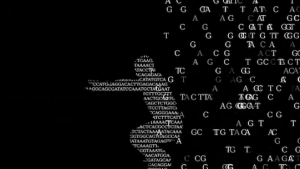 Selbstverbesserung (self-improvement), Jörg Piringer (2015).
In a world now familiar with online identity reconstruction through ‘cat fishing’ and ‘jacking’ the authenticity of the ‘I’ and the ‘real’ kept reoccurring, whether through immersive or experiential (virtual or augmented) narrative form or collective storytelling, and candidly often through commercial motives (data mining the analytics of personal profiles) and marketing terms such as ‘onboarding’. I can see how money might be made this way; but equally, as Guy Gadney (known for storytelling powered by artificial intelligence with Charisma .ai, and games developer To Play For) observed: ‘Monoliths try to recreate us inside their machines’. And this battle between the self online, as expanding the personal, or simply opening it up for plunder and exploitation, lies at the heart of the debate today. As Josie Barnard (Middlesex University) said of tweeting: ‘Where does your personal life end?’ What are the ethics of memoirs relating personal details, when writers must ‘provide such filters themselves’ and lawyers no longer check information?
Yet whether a reader of a book or a mobile phone (locative environmental experience), or experiencing an agential VR or augmented reality narrative ‘situation’, or in a theatre watching a poetry film, or even enjoying the co-presence with actors of being part of personalized storytelling, at MIX 2019 it seems narratives were concerned to tell or generate live authentic stories. Perhaps this isn’t surprising since, as Guy Gadney noted: ‘Humans view the world through the language of stories’ in all our interactions. But some interactions have a bias: the type of human walking the streets wholly absorbed in their mobile device without fear can be identified as strong, confident, and usually male.
‘Mixers’ could have begun the conference with two workshops: ‘The Productive (and Happy) Academic Writer (Bec Evans, Prolifiko and Chris Smith) or ‘Short and Drawn Out: Collaborative Augmented Reality Drawing’ (Kim Plowright). Pro-Vice-Chancellor and Dean of Graduate College Professor John Strachan gave a warm and comprehensive address. As many as 170 Bath Spa University PhD students are based at Corsham Court; and, as the original home of Bath Academy of Art, they possess a sizeable modernist collection; whilst leading British artists such as abstract landscape painter Howard Hodgkin (1932–2017) taught there.
The ethics of storytelling began the day – how can we write about stories ‘outside our area of expertise’ (Nikesh Shukla)? Australian Donna Hancox (Associate Director of the Creative Lab at Queensland University of Technology) expanded on avoiding the depersonalizing role of technology in running community experiential storytelling projects. She noted empathetic approaches are needed when working with vulnerable groups, and seeking authentic voices. The presence of a microphone on a table can cause complete mistrust. It was particularly revealing and touching to note that women in prison missed sounds from their home environments more than anything; especially bird song. She noted that the personal is so important in counteracting disinformation, and changing systems; and that we need to learn from one another on a human level.
Re-Mixing Reality – Fiction in Real-World Situations
The ethics of residencies where fictional characters perform in a real-world narrative or museum collection ‘tricking the public without malice’ (Kit Green) was discussed by Stella Wisdom, of The British Library. Poet, performer and novelist Rosie Garland (University of Manchester) writes allegorical, fantastical novels set in the past, with characters who are similar to real life. She told us about her residency at the John Rylands Library – having a lived experience onsite – and deliberately writing in the first person, not to be ventriloquized.

Jillian Abbott’s (City University of New York) themindfulmouth Instagram project on mindfulness, memory and food, is rich with an Australian’s take (keen eye) on living in the US (and its cultural differences). It includes everything from journalistic information on subjects like Community Supported Agriculture to Easter traditions. Followers click on a food image and find a short narrative, and then comment. However, in recounting her childhood she says she worried about being inauthentic; or being a writer, manipulating followers in a professional way. She wondered if she had redefined her mother (whose cooking replaced affection) for example. ‘Yearning for something, but not want it; something that maybe never existed.’ Gillian noted that home for her was landscape and place. The blueberries of Maine left her disconnected, being alien to her Australian roots. As Rachel Genn (Manchester Metropolitan University) noted: ‘history is not shapely’ quoting Hilary Mantel (www.theparisreview.org, no. 226). As writers, we cannot iterate the same event as it happened. Telling or retelling requires a (or multiple) narrative trajectory(ies).
The Real Heightened: Site-Specific

Sound and locative media artist Duncan Speakman (UWE Bristol) began by telling us about the organ in Halberstadt, Germany, where composer and artist John Cage’s (1912–1992) composition ‘As Slow as Possible’ will sound for 639 years. Speakman introduced the Only Expansion project, an augmented walk ‘that remixes the immediate sound environment of the audience and combines it with field recordings from remote locations’ accompanied by evocative music. Comprised of a guidebook and noise-cancelling headphones with binaural mikes on the outside (the sound from which is fed through bespoke mobile devices before being fed back to the headphones), you can also respond to prompts in a location: ‘Find something that has been on this earth longer than you’. Ultimately you are within a blended, timeless, augmented personalized experience.
Similarly, the commercial Fantasia Express (in conjunction with Virgin trains), presented by Alastair Eilbeck (Liverpool University), uses locative media, mixed reality and a prototype mobile application to deliver interactive augmented reality storytelling content to train passengers; including noting historical events that have happened on the journey. Not wholly philanthropic, this is also a method to deliver Digital Out of Home (DOOH) marketing content (an area which is expanding in relation to marketing through video screen technology).
In stark contrast my family history novel Tree (about my family’s working relationship to land and place) encompasses research combining personal and public facts (gathered over 25 years), geopoetic field notes and poetry films; and is an ‘old school’ approach, but geared towards online access as well as print. In my presentation, I read from a chapter, and showed Paper River (2019) www.sarahtremlett.com about my great grandfather’s paper mill in Devon that I visited, re-experiencing events that happened there during the First World War – as both public and personalized history.
In utilizing historical information about a single individual, Lisa Gee (Kings College, London) and Michael Kowalski (The Fitzwilliam Museum, University of Cambridge) spoke about HayleyWorld a digital biography (platform and player interface) of essayist, poet and amateur doctor William Hayley (1745–1820). Here, (perhaps to bring it to life) Gee felt she needed to change the original text to the first person. Equally she noted ‘You can’t set out a person’s life as it is lived, because it gets boring in the last third’.

On a much broader (and clearly financially remunerative) scale, Nicole Basaraba (Trinity College, Dublin) spoke about remixed transmedia for non-fiction genres, specifically online tourist and cultural heritage sites across multiple platforms. These offer opportunities for data mining, remixing (scraping) and producing multimodal often marginal proto-stories (fragments of stories) reverse engineered into narrative under a single ‘mothership’, where you choose the narrative you want to explore as an interactive web doc.
Rachel Genn’s (Manchester Metropolitan University) work began in neuroscience, but she expands upon her research findings in creative and often absurdist ways. Also concerned with the past and its effect on the present, her project on regret entailed a gallery installation entitled the ‘National Facility for the Regulation of Regret’ (2015) and another centred on a ‘Regret-o-Tron’ (2016). This was ‘a reinvention of digital psychological testing ostensibly uncovering an individual’s propensity to regret’. She is currently working on VR/binaural storytelling (WHISPERS) in development with Human Studio, Sheffield.
Freja Gyldenstrom presented the historical development of engaging immersively and interactively with stories since the 1960s (although she noted that immersion in historical storytelling began as early as pagan rituals). Beginning with ‘the author dies tragically in France’ in 1967 and tabletop fantasy role playing game Dungeons and Dragons, she moved through the 80s, past the Matrix, to the 00s–10s. ‘Retrofuturism and the Real Virtual Reality’ sitting alongside augmented reality games and social media narratives.
Through combining ethics with VR and avatar generation, in ‘The Inclusive Forest’ project, Italian Enrica Lovaglio Costello (Cal Poly and UCSB) demonstrated how she uses multimedia, and interactive experimentation with personal data such as biometrics, pulse rate etc. to investigate how to identify stigma and bias in society. ‘The participants of the art-based VR experience first explore a surreal digital forest, then collaborate through stories, which demand quick associations and decisions, while we collect their biometric data and time of reactions. This project’s innovation resides in the unique combination of a game-like, non-threatening, artistic VR experience … with exploring emotions such as compassion and empathy.’ She notes: ‘We are watched and judged which is important in our lives’.
It’s Your Story(ies): How do you want it (them) delivered?
David Millard and Callum Spawforth (both University of Southampton) discussed story making with multiple players. Multiplayer Interactive Narrative Experiences (MINEs) and the platform StoryMINE offer opportunities for multiple players to experience distinct narratives (multiplayer differentiability) whilst their actions influence the storylines of both themselves and others (inter-player agency). Intriguingly, this also allows two readers to co-create a historical past and affect decisions through shared agency.
Richard A. Carter (University of Roehampton) and Jenna Ng (University of York) spoke on Wayfaring in Time – the Ambient Storytelling of Wandering Games, inspired by work conducted as part of the Ambient Literature project. They discussed the way that narrative construction changes when emerging from virtual environments and ambient storytelling; where ‘evoking time’ is dominant, as well as ‘becoming, transience, rhythms, moods and reflective wandering’. How can such narratives be compared with the three-act structure of traditional storytelling based on conflict and resolution? Such questions are also very familiar to poetry filmmakers.

Sarah Ciston (University of Southern California) gave us a performance presentation that explored how our bodies and our data merge with technologies. How much are we, as both author and audience, becoming or made by the machines that produce us; where does the personal end? She demonstrated writing with self-tracking data recording her body, and ‘ladymouth: Anti-Social-Media Art as Research’ – a chatbot that ‘tries to explain feminism to misogynists on Reddit’. In this way, the chatbot ‘I’ is part social warrior, using one stage removal to expose the mental processes behind the politics of abuse. ‘The chatbot responds with quotations from feminist theorists and then logs its conversations’ which Ciston incorporates into writing, performance, and video art’. Ciston aims to reveal the risks online for anyone ‘perceived as female, queer, non-binary or trans, not white, or otherwise ‘other’’.
R. Lyle Skains (Bangor University) wasn’t able to attend, but her presentation focused on utilizing digital ebooks for the purposes of writing and designing hypertext fiction. She is specifically interested in how to gain remuneration for the work, particularly when examining the commercial ebook market largely controlled by Amazon.com.
Matt Hayler (University of Birmingham) drew on Kate Pullinger’s Breathe and Duncan Speakman’s It Must Have Been Dark By Then, (from the AHRC-funded Ambient Literature project) to explore how Ambient Literature entangles the reader with texts, tools, technologies, and with flows of time between histories and the present. The storyworld and real world blur, but also indicate the importance of narratives of identity and place in the real world.
For a VR artist working in Hollywood, Sunny Teich (Victoria University of Wellington) who interestingly ‘never makes things in real time’, told us Hollywood directors make the assumption that ‘photorealism equals believability’. In VR story telling she seeks to overcome a clunky tension between technology and story, between immersion and interactivity, and obtain what she calls deeper presence – closer to authentic experience.

Aste Amundsen is a Fellow of Immersion with the South West Creative Technology Network and creator of theatrical storytelling for live, personalized, immersive experiences such as The Apocalypse Gameshow. She described her impressive start-up – Computer Aided Theatre – which ‘builds a platform for data-augmenting live, actor-to-audience interaction and innovates human-centred interaction design’. Data gathering, or profiling-for-personalization is central to this and she has worked with clients across the cultural, retail, and festival markets. ‘Have you got what it takes to be a protagonist?’
Post-dramatic theatrical practitioner Professor Sandra Gattenhof and Nathan Sibthorpe (both Queensland University of Technology) discussed Crunch Time (2018) a ‘transmedia dinner’ project by Counterpilot using medial interfaces, about the discomfort of Democracy in 2016, with Trump, Brexit, and the rise of the silent majority. Moving beyond token engagement with audiences, this work is a performative dinner party designed to model the processes of democracy.
‘Seated around a projector-mapped dining table, participant diners use interactive tools to vote for every ingredient used in an elaborate meal. Viewed via live-feed video from a nearby kitchen, a guest chef prepares real food in response to demand.’ Gattenhof noted whereas old theatre is didactic with a script, post-dramatic theatre has a text and suspension of ascribed meanings (maybe many potential outcomes), but importantly where the audience have co-presence, or an ‘energy exchange’ as part of the work.
 Breathe, Kate Pullinger.
Appropriately, at the very heart of locating the contemporary ‘I’ within narratives lies MIX co-director Professor Kate Pullinger’s (Bath Spa University) seminal Breathe – a ghost narrative for young adults as a ‘browser-based book made for mobile phones’. Breathe centres on the story of Flo, who talks to ghosts, and particularly her dead mother Clara. Activated through Wi-Fi, the narrative alters according to the reader’s location. Through picking up personal information that becomes part of the story (i.e. place, weather, time, even ‘seeing your bedroom’), the ghosts uncannily ‘haunt’ the reader in the same way that Flo is haunted; providing an unsettling panoptic gaze. This is achieved through APIs – application programming interfaces – published by Visual Editions with Google Creative Lab and in association with the Ambient Literature research project. Here the standard concept of ghost story meets individual environments, profiling and data gathering. A story tailored to the self, and providing a different experience for each reader.
Ultimately, on a cautionary note, whilst Google’s methods of gathering and sharing data might be applicable (or similar) to many in these presentations, Guy Gadney also warned that Google has been allegedly scanning over 25,000,000 in-copyright titles, without applying for copyright. Apparently, the Authors Guild took them to court (which lasted seven years), with a final undisclosed settlement. Becoming visible in ‘wild west’ (Barnard) cyberspace is not an innocent exchange, it is a bargain. The joy of being authentic enables us to tailor extraordinary narrative experiences, but there are also far greater consequences than we can ever predict.
Poetry Film
Thomas Zandegiacomo del Bel
It was a very special to see Thomas Zandegiacomo del Bel (artistic director of long-running ZEBRA Poetry Film Festival) in the UK at MIX. He gave a talk and also curated a screening of European poetry films, alongside British poetry films selected by Lucy English (available for viewing throughout the conference). In introducing ZEBRA he noted that ‘the first ZEBRA in 2002 received over 600 competition entries from 35 countries, and now receives 1200 from over 90 countries’. He went on to give a brief overview of the history of poetry film: ‘directors such as Germain Dulac (1882–1942) or Man Ray (1890–1976) used the non-narrative structures of the poems by Charles Baudelaire (1821–1867) or Robert Desnos (1900–1945) in their films to create impressive images and experimental films’. And he pointed out that: ‘L’Invitation au Voyage (1927) by Dulac is a timeless interpretation of Charles Baudelaire’s ‘Les Fleurs du Mal’’. Zandegiacomo del Bel also emphasized the importance of Ukranian-born American experimental filmmaker Maya Deren (1917–1961) in developing the avant-garde in America in the 1940s and 1950s. He then presented a selection of poets and filmmakers with different approaches to narrative in poetry film.

Tim Webb
Award-winning British animation director Tim Webb is a senior tutor on the animation programme at the Royal College of Art, and his poetry film 15th February (1995) with poem by Peter Reading, won the first main prize at ZEBRA 2002. Webb describes the poem which mixes stop-frame, live action and drawn animation as: ‘Love gone wrong in 294 cuts. Symbolism and sadism meet live action and stop motion in this tale of rhythmic rejection and its aftermath’. The poem, by Peter Reading, reproduces the loss of coherent sentence structure that we feel when emotionally overwhelmed, or with a ‘lyrical ego’ thwarted. Zandegiacomo del Bel noted Webb matched ‘the torrent of words with a quick change of images’ which accelerate into nonsense towards the end, accompanied by time-lapse ‘to respond to the leaps of the poem’. It was clear how the obsessive ego in the verbal narrative was reflected in Webb’s visuals. ‘Tim Webb responds with a subjective camera. Just as the perception of the lyrical ego shifts in the poem, so too do the images in the film change’. Equally Webb uses more and more animations ‘until the real world has disappeared’. Zandegiacomo del Bel further explained that Reading’s book Diplopic means ‘pertaining to double vision. Every subject is treated from two sides. The funny and the ghastly are symbiotic’. This film truly conveys the dark side of infatuation.
Taatske Pieterson
Dutch filmmaker Taatske Pieterson was the winner of the ZEBRA prize for Experimental Film Poetry in 2006, for the film One Person/Lucy. Taken from the poem ‘One Person’ by Pieterson, it centres on the actress Lucy Gold. The spoken text in the short film is based on historical facts, worldwide statistics and personal statements collected from the internet. She manipulates representation to create ‘images of an event that never actually occurred’. Zandegiacomo del Bel noted that her film ‘reproduces the rhythm and content of the poem in a very sophisticated editing sequence and with technical gimmicks. She changes from a close-up to long shots; zooming in and out quickly … sometimes only patterns are recognizable (which become symbols). The person or the victim disappears and becomes just a number. The volume of the film increases to the same extent, so that the spoken word sounds like a drumbeat.’ He noted that the text-on-screen is a ‘poem of numbers’ where people who have lost their lives are mentioned, but it ‘becomes clear they do not touch us’ being an anonymous mass.
Alice Lyons and Orla Mc Hardy
Orla Mc Hardy (who spends her time between Ireland and the USA) is a freelance animation director with a background in fine art. Alice Lyons is a poet born in the USA and living in Ireland, with an interest in bringing poetry to new contexts and media. Zandegiacomo del Bel discussed their animated poetry
film The Polish Language (2009) including poetry by Lyons with fragments of poems by Tadeusz Różewicz (1921–2014), Zbigniew Herbert (1924–1998) and Wisława Szymborska (1923–2012). The poetry film ‘pays homage to the revitalization of poetry in the Polish language in the 20th century. Using hand-drawn, stop-motion, time-lapse and computer techniques, the poem unfolds onscreen, with typography as a key visual element. Its visual style is loosely based on underground publications in Poland in the 1970s and 1980s, known as “Bibuła”. A chorus of voices sampling poems in Polish, woven together with original music by London-based sound designer Justin Spooner, combine to create a powerful score’ (Poetryfilmkanal, 2015). This animation plays with different typographies, which are accompanied by a voiceover and music. Zandegiacomo del Bel notes that, similar to Pieterson and Reading, Lyons plays with language – the Polish language. He said ‘she brings this language closer to the reader using very beautiful metaphors’:
A poultice of sliced onions on the throat
may help you speak it.
Cats are known to rub up against its sibilance.
Crush a cherry and a beet to arrive at its colour:
czerwony.
If that fails to convince, make a soup.
Kristian Pedersen
Norwegian filmmaker, animator and designer Kristian Pedersen has produced animated poetry films in collaboration with the small press Gasspedal, publishers Gyldendal, and the National Library. Kristian was awarded the Goethe Institute’s Film Prize at ZEBRA Poetry Film Festival in 2014. Zandegiacomo del Bel noted that his animations are partly reminiscent of works by German-American Oskar Fischinger (1900–67) and his ‘absolute films’, Rudi Klemm (1904–55), Lotte Reiniger (1899–1981), and others; as well as the play of pure forms, colours and shapes of Hans Richter’s (1888–1976) Rhythmus 21 (1921). Pedersen likes ‘how animation may convey or illustrate while maintaining some space for a reading experience’.

Zandegiacomo del Bel discussed the poetry film The Pipes (Pipene in Norwegian) with poem by celebrated Norwegian poet Øyvind Rimbereid, where the title means both organ pipes but also chimneys. Pedersen notes ‘Pipene is an ode to the industrial and cultural history of Stavanger, a city that thrived for a century on the canning industry before it shifted to the oil industry’. Pedersen’s films are often minimal, and visually restrained. Here delicate, pale square shapes and cubes (apparently referring to labels) create a humorous dance, alongside pipe sounds. Pedersen states of his minimal ‘non-representative visuals’ or ‘subtle abstractions’: ‘To introduce a visual and animated language, should sometimes be taken in gentle steps, to avoid suffocating the film. Too many levels of expression in one place can fill in all the blank spaces so nothing is left for the imagination’ (Naschert, 2015).
I attended Pedersen’s talk and exhibition at ZEBRA 2014, where Rimbereid also gave a reading of organ poems. This was movingly accompanied by an old silent-film organ, situated in what was then ZEBRA’s home location –The Babylon Cinema in Berlin.
Zandegiacomo del Bel observed that ‘Pedersen establishes a connection between the content of the poem, the atmosphere and the type of reading by relating the colours and forms to the harmonium sounds’. For me this is very evident when the line ‘a faint, but tense tone from the trap string’ is balanced visually with long lateral shapes that reverberate into the distance.
Zandegiacomo del Bel then presented the New Zealand filmmaker, designer and playwright Welby Ings. Each of his films deals with traumatic and socially marginal issues, often reflecting homosexuality, children and dark, small town psyches.

Boy (2004) is an unusual story of a young male prostitute in a New Zealand village who struggles to expose the truth behind a fatal accident. Munted (2011) is a story about an accusation of paedophilia and its terrible consequences. Sparrow (2016) is the lyrical story of a small boy who believes he can fly. However, his life is overshadowed by discovering the truth behind the legend of his grandfather who died a hero in World War Two.
Boy is set around a gay rent boy who exposes the truth about the death of a girl in a hit and run accident. Without dialogue, Ings makes palpable the harsh, brutal, claustrophobic chauvinism and sexual violence of a small town in New Zealand, but includes occasional interjections from his poem ‘Flightless Angels’. ‘In the silence of my childhood there were angels’. The poetic text appears at random moments in small, poignant phrases ‘my mother died of …’ and the film also includes the New Zealand language of ‘bogspeak’ (or parley) used when cruising for sex in public toilets.
Ings is highly visually literate, and uniquely doesn’t write scripts first, but produces numerous drawings which then contextualize the drama and characters within a certain type of atmosphere and texture. Framing and colour feature, alongside a soundscape that switches from background sounds to almost music video narrative. As Thomas said this is ‘intensified storytelling’; where we seem to move from memorable framed image to memorable framed image in slow and concentrated vignettes, encapsulating dramatic points in the narrative. Symbolic images of friendship and strength include strange dolls which signify as ‘rejected pieces of other people’s lives’ – things ‘bound by tradition and silence’.
Like Boy, Erlking (2015) by Swiss animator Georges Schwizgebel from the poem Erlkönig by Johann Wolfgang von Goethe (1749–1832) is also without dialogue and centres on a young child’s point of view as he is carried by his father, riding through the forest. He thinks he sees the King of the Fairies who, with a huge mask-like moon face is both fascinating and frightening at the same time. The fabular scenario is entirely expressed through naive, coloured animations directly painted onto the film stock. These are combined with a sophisticated ‘drone’s eye view’ to add a lyrical rhythm to the horse and rider. The dream-like setting and illustrative looseness of the imagery are counterpointed with music composed by Franz Schubert and rewritten by Franz Liszt as a solo piano version. Zandegiacomo del Bel noted: ‘With skilful effects like morphing, the animation flows like the music. The result is an extremely harmonious flow of image and sound’.
Belgian visual artist and filmmaker Jan Peeters and Belgian poet Paul Bogaert have collaborated on a number of highly experimental films. In Peeters’ ‘iconotextual’ works, he ‘merges typographic texts and moving images (with emphasis on filmic images) to form visual-textual unities of content, which cannot be categorized as either pure image or pure text. He does this without focusing necessarily on certain implicit elements of mainstream film, such as narration, acting or characters’. Zandegiacomo del Bel said: ‘Paul Bogaert and Jan Peeters work with very unconventional narrative structures. The poems sometimes appear as a dialogue between fishes, sometimes as a Power Point lecture. Thus, they break the superordinate narrative strand, so that the viewer has to orientate himself again and again in the text. This is what makes their films so unique’.

He screened the humorous, succinct, text-based Disaster Movie whose content sums up the genre in just three consecutive words, with arrows: LIES – CONFLICT – CATASTROPHY followed by a blue wash effect that takes us back to the beginning again, to be repeated over and over. Through contesting narrative forms Peeters and Bogaert create humour out of narrative itself. I would say that this video poem is a text-based metanarrative on narrative construction. In other words, the narrative of this video poem is metanarrative!
Moving poetry forward in terms of advancing the possibilities of concrete text itself are Norwegian Ottar Ormstad and Jörg Piringer from Austria. Ottar Ormstad is known for his digital conceptual abstract works with text (demonstrating aspects of Goldsmith’s ‘uncreative writing’), usually premiered in venues devoted to literature in programmable media (digital or electronic literature). Ormstad says of his way of creating telefonkatalogdiktet (the phone-book poem) from a book of concrete poetry (Samlaget, 2006): ‘When reading (!) the phonebook of Oslo, I had picked out more than a thousand family names on a very subjective, poetic basis. By ordering them after numbers of letters and syllables, I have created different structures and pictures. This was possible by the use of the font New Courier that gives all letters the same space on the line (monospace), just like old typewriters did. Courier was designed for IBM in 1955, and released without copyright’ (Ormstad, 2017). The video poem Ottaras: Bråten (2018) based on the phonebook poem, was also part of the continuous poetry film screening (see on).
Zandegiacomo del Bel introduced Ottaras: Long Rong Song (2015) (based on Ormstad’s Audition book, with Herald Gothic font) and working with Russian composer Taras Mashtalir and Russian director Alexander Vojjov. Here, sound-based language poetry seems to be somehow connected to the shapes on screen, however the subjective is absent. Ormstad reads a cycle of five poems, made of four letters of an artificial language system which he created, where meaning may or may not be apparent. In
contrast YellowFlowerPower (2017) which uses text as ‘a letter carpet‘ of different (untranslated) song titles and slogans from the 1960s, is clearly a more personalized narrative. Collaborating with artist Margarida Paiva, his subjective approach is further enhanced by photographs, for example of sculptures by Gustav Vigeland, images of flowers, or his photo of Mick Jagger. It begins in Paris 1968, without sound, then water, then a jaunty extemporized piano with yellow flowers and finally the soundtrack becomes more abstract and complex.
Viennese media artist Jörg Piringer’s workhttps://joerg.piringer.net/ is at the forefront of combining poetry with social media and interactive systems. His ‘insta visual poetry’ for Instagram comprises 30 animated Instagram visual poetry videos featuring animated letters without sound. His Tiny Poems bring concrete minimal poetry to mobile devices like Apple Watch, iPhone and iPad. ‘The pieces are optimized for the screen of the Apple Watch and show short and dynamic texts for the wrist. The poems reflect time and vanity, and change constantly according to continuously passing time’. His work brings poetry back to the world of media, but for the individual. In i/mine/my/me Piringer has taken our obsession with the ‘self’ to the extreme. Zandegiacomo del Bel elaborated: ‘collecting information over a period of one month about his own thinking, communicating in the extended electronic living data space … On the surface the project is about him and his movements in the virtual and real world, but at the same time trends like quantified self, big data, self-improvement and social networks are made transparent and tangible. He is only the anchor point; the narrative of his biography is replaced by the narrative’.
Selbstverbesserung (self-improvement), Jörg Piringer (2015)
Piringer’s work tractatus infinitus VR is a poetic, audio-visual hallucination inspired by Ludwig Wittgenstein’s Tractatus logico-philophicus in virtual reality. ‘Fly through the acoustic and visual echoes of the literary traces of Wittgenstein’s logic terms, philosophy and typographic landscape … listen to the eerie soundscape that surrounds them. This app is best viewed with Google Cardboard and other 3D mobile virtual reality headsets’ (Piringer). In mnasir (2015) each letter ‘represents and manipulates a live recorded sound snippet of Piringer’s voice. It is visual noise poetry improvisation’ (Piringer) where letters fly back and forth, as if the frame of the image is solid, and the language is both concrete and abstract. In ‘mnasir’ I feel it is as if the letters themselves (along with the buzzing and whirring of a fractured soundscape) are trying to make sense, and just cannot arrange themselves in the correct order. We are waiting for meaning, even chance meaning to happen; and of course, we end with the letter ‘I’ on its own, but repeated over and over.
Whilst Piringer’s work is often highly humorous, observing the ridiculous ways we conduct our lives, he exposes serious questions regarding our cyberspace monoliths: ‘Who controls and regulates the algorithms that control the internet services? … Which political and social attitudes are coded by the choice of source texts for self-learning programmes? Can there even be objective algorithms?’
Zandegiacomo del Bel summed up: ‘Poetry films do not have uniform narrative structures. With each new technology, filmmakers and artists respond differently to the written word. They take up the forms of modern poetry and transform them into moving images. The filmmakers respond to the renunciation of rhymes and verses or the use of ‘unlyric’ language elements (technical language, everyday language), condensed language (neologisms)’. Or ‘the combination of concrete and abstract elements or coded language and new visual language (metaphors) with cinematic elements and the mixing of genres: animation, feature film, experimental film and documentary film; or with new technical elements such as morphing or digital effects. Modern poetry tries to achieve maximum impact with a minimum of linguistic material. This is also often the case for poetry films, which achieve maximum effect with a minimum of visual material.’
When asked where he thought poetry film would go next, Zandegiacomo del Bel ventured that artists such as Ormstad or Piringer were moving more towards the interactive and media installation, or 360-degree filmmaking. He also noted that the genre would never be exhausted or saturated, there would always be room for new forms and variety.
Poetry Film Panel
Jane Glennie
Typographic designer Jane Glennie, who is known for flicker-based poetry films, presented her work with the genre, describing her practice and noting historical films by American experimental filmmakers Tony Conrad – The Flicker (1966) and Paul Sharits’ – Word Movie (1966). The flicker technique depends on hundreds of still images or photographs that become a very fast sequence of discrete images (25 per second). For example, her forty-second Blue Flash Flash (2017) – a poem to be read in one breath, by British poet Julia Bird (about the moment a child learns the word ‘Octopus’), utilized 625 images in its intense and brief delivery. Such condensed impact and novelty, both by poet and filmmaker meant Lucy English and I judged it a finalist in Poole Poetry Film competition.
Films discussed included Being and Being Empty (2018) – 37 seconds; Moss with poem by Natalie
Whittaker – 1:12; Glitter (2018) 1:23 (on being both a glittery dreamer and being yourself attuned to reality) co-written with Lucy English for The Book of Hours; and also Letter to Anyone who is Listening (2019) 1:19, screened as part of the British poetry film screening (see on). Glennie thinks that in non-flicker films there is often ‘too much visual potency’ and as a result we aren’t ‘listening to the text’. She also says that viewers can’t quite tell the meaning in flicker films, and are subconsciously (or subliminally) approaching images more conceptually, like we do text on a page. She thinks the technique is so successful because she has created ‘a fusion of text and meaning that video poetry strives for’.
Mary McDonald, Natasha Boskic, Mohamad Kebbewar
Canadian multimedia artist Mary McDonald, Serbian-born poet Natasha Boskic and Syrian poet Mohamad Kebbewar have been working together on a poetry film and AR project On the Margin of
History (2019) that expresses thoughts about the similar horrific war-torn fates of Syria and Serbia. It begins with shadows on a wall, the initially ‘normal’ background sounds of a bell and traffic, and then a sudden interjection of gunfire. Kebbewar ‘On the margin of history, time is over for my generation / Play no more, think no more’ … The wall begins to peel like turning a page in history; and still, fragmented images and photographs that twist and turn float steadily across the screen, carrying the memories of lives with them. Boskic ‘It started with a boring evening after basketball practice, but turned into a dark sky with shiny orange balloons / all TV channels merged into a single message, our country is in a state of war’.
Then the poets’ words alternate, as if fusing together in the pain and suffering: Boskic ‘How long do we need to stay here?’ Kebbewar ‘One more bomb blast throughout the city …’ We are made to see from the horrifying point of view of the victims. Boskic ‘There is no language to explain the logic of how that man in the plane can see us as dots and x’s on his map’… ‘holding two little hands in mine with sweaty palms’. Gradually text echoes individual spoken words, such as ‘peace’. Through oral and visual symbolism, such as the use of layering, time lapse, double exposure and hyper lapse, the film generates metaphors of fracture, destruction and loss. This project is also available as an AR exhibit consisting of ‘a mosaic of stills. When viewed with the AR app on a smartphone, the stills become short video clips from the video poem. These fragments explore the surreal experience of displacement’. As Mary says, ‘you stop the progression of the film to hold on to one moment’. This concept ratifies the sense that in a war zone, you must constantly be aware that each moment could be your last.
Chaucer Cameron
British poet Chaucer Cameron (Poetry Film Live) spoke about the Wild Whispers (2018) project, based on her poem ‘Frog on water’ with 12 poetry films in ten languages. Centred on ideas of connection and disconnection, adaptation, translation and mutability of form, the poem effectively combines loss of both an environment but also innocent childhood. Chaucer showed the first, sublime version by Helen Dewbery including an instant Polaroid camera. She noted that sometimes the translations became too long, but she had to let it grow through organic development.
In the version made in New Mexico, filmmaker and editor Sabina England – a deaf Bihari/South Asian American included Navajo and American sign language alongside English. She made a parallel between the plight of Native Americans and the plight of all refugees today. The final film in the collection was Dave Bonta’s (Moving Poems) erasure-based Sea Change – removing words as a metaphor for the sea eroding the low-lying coastal regions of the USA. For me this final poetry film is like a moving version of the visual ocean-referencing poem ‘Un coup de dés jamais n’abolira le hasard’ (1897) by the French Symbolist poet Stéphane Mallarmé.
Sarah Tremlett
I gave the next presentation on Paper River (2019) www.sarahtremlett.com reading a chapter from Tree (a geopoetic ‘novel’) about my family’s working relationship to place, comprising factual research, poetic field notes and screening a poetry film. This particular film is about events that happened at my great grandfather’s paper mill during World War One and is part of 25 year’s research into family history, as mentioned earlier. I include further details on this project in the British Poetry Film screening later on.
Poetry Film Screening
European Poetry Films
It feels as if Thomas Zandegiacomo del Bel deliberately chose studies of human emotion in the first four films for the separate screening. Firstly, we are presented with our deepest fears, followed by concrete visual text humour, then gentle line drawings and fractured, surreal figures expressing in different ways the human as part of our surroundings.
Die Angst des Wolfs vor dem Wolf (The Wolf Fearing the Wolf) (2014) is a film by German photographer and cinematographer Juliane Jaschnow and German poet Stefan Petermann. ‘Blood-red light is flickering. A howling in the void. The past becomes an armour. No matter which side you take: you only lose with staying who you are’. In a short, but heightened space of time, a sense of dislocation and disturbance in the darkness is punctuated at unpredictable moments with a half-formed flash of a red face or body. The resulting images remind me of Francis Bacon’s (1909–92) raw portraits, except with the increased tension of the close or imagined unknown; and a low, visceral, soundscape, like a raised heartbeat. Significantly, the poet begins speaking once the flash images have ended, generating a palpable sense of having just experienced them.
Selbstverbesserung (self-improvement), Jörg Piringer (2015) is a very funny text-based video from the media poet Jörg Piringer about exercise and improving the body. ’15 fat burning foods with negative calories’; ‘I swear I will improve myself. Good better best.’ Letters float around the screen, then form a silhouette of white letters against a black background of a man doing knee bend exercises: up and down, up and down. In this image, I can see reflections of a similar technique (using positive and negatives of a crowd) in Combat de Boxe (Boxing Combat) (1927) by Belgian film director Charles Dekeukeleire (1905–71) and poet Paul Werrie (1901–74).
It is the strained, repetitive beat of his recitations to improve, made in time with the knee-bends, that creates the humour. The relentlessness self-willing: ‘I have the power’, as letters float across the screen, symbols of otherness, of the life that is playing with him, demanding more and more that he keep up with it. We sense that an invisible authority is watching (‘panopticon’ gaze, Bentham c. 1791). Ultimately the word ‘I’ becomes a meaningless repetition, a stuck record, that disappears in a sea of letters. For me, this film conveys so clearly both the cyberpsychology of control, whilst also mimicking self-help books such as the early and strangely appropriate Psycho-Cybernetics (1960) by Maxwell Maltz.
In Leerstelle (Vacancy) (2016) by German animator Urte Zintler and poem by Hilde Domin, the joint forces of movement and stillness become a central metaphor in the problematic search for ‘home’: ‘One must be able to move but also be still as a tree: as the trees have rooted themselves in the ground, as we stand fixed, despite the landscape pulls away.’ Line drawings of everyday life are multiplied over and over as faces and shapes make new vibrating patterns. It is as if we are all connected lines that interweave, and ultimately, like the animation, become particles that float in never-ending rhythms.
Leerstelle (Vacancy) was followed by a more surreal and visually fractured way of examining the moving body – Marchant Grenu (Walking Grainy) (2013)
This poetry film by inspiring French artist and inventor Francois Vogel combines a distorted, experimental lens, paired with Belgian poet and painter Henri Michaux’s (1899–1984) poem with inner vision-like properties. The result is an absurdist, distended ‘hall of mirrors’ image, which makes kaleidoscopic patterns of streets and the human body. Despite the visual difference from Leerstelle in both cases, the body becomes part of the patterning of our environment, losing the androcentric, myopic eye, and defined object/subject boundaries.

The screening now turns to abstract ‘landscape’ and one of the most minimal, animated poetry filmmakers – Norwegian Kristian Pedersen (see earlier poetry film The Pipes). In the poetry film Norangsdalen (2010) (from the eponymous poem by Norwegian poet Erlend O. Nodtvedt) about a landslide damming a river in Norangsdalen and flooding a farm and forest, the visuals are surprisingly reflective and abstracted. Pedersen’s familiar ‘bouncing’ boxes of coloured, pale blue and green squares (and spheres) shift to make different patterns, symbolizing the unstoppable change of landscape: ‘but grass can swim’.

(No) We, I, Myself and Them? (2017) is from the poem ‘Massacre’ by Chinese author, reporter and critic of the Communist regime Liao Yiw. With film by German digital media artist Christin Bolewski the narrative explores the relationship between the individual and the political landscape. Beginning with ‘floating particles’ coming towards the viewer, it uses contemporary and historical documentary footage recorded at Tianamen Square. As multiple screens appear (indicating intense surveillance) it is clear some of the images were filmed secretly on a mobile phone, adding another layer of unsettling meaning. The person holding the camera had placed themselves at risk of countermanding the authorities. Overall the film makes us think about state control and human rights, and couldn’t have been screened at a more appropriate time with recent events in Hong Kong.
The final film is Bråten (2018) based on Ottar Ormstad’s ‘telefonkatalogdiktet’ (the phone book poem). ‘Bråten’ means a ‘farm that was originally forest cultivated by burning’, and in this video poem all the names from one page in the book are recited that end with the term. With video by Russian media artist Yan Kalnberzin and soundscape by Russian composer Taras Mashtalir, text plays games across the screen, fanning into radiating circles, with a sun-like / burning halo effect, expanding way beyond the confines of the line. Devastated landscape becomes charred remains becomes toponymic name – taxonomic evolution. The voice is deep and slow, and, in some ways, it seductively updates the links between the oral and visually concrete in the first video poem by EM de Melo e Castro Roda Lume (1968).
British Poetry Films – selection by Lucy English
The Girl and The Moon (2018) by poetry filmmaker and environmental scientist Lucia Sellars is a ‘reflective piece about the menstrual cycle’. The moon is a metaphor for menstruating; and the film’s visuals are an oneiric sway, with golden, hazy colouring, where a continually whirling Dervish in slow motion, also acts as a symbol of life’s continuing cycles. She says she had eaten something white, and the moon hid in her belly: ‘I caught myself tapping a rhythm with the tip of my foot, when suddenly I started to dance, like the Whirling Dervishes’.
What is most noticeable about this film is that Sellars’ gentle, almost tentative voice, combines grounded, everyday events (apples by the bed) with mystical transcendence. The moon was in her belly and she was covered in fog. ‘My hand unfolded like a butterfly, oh I thought the moon has melted …’ To write a poem about menstruation and not mention blood directly, but to channel it through the beauty of the moon (and its own monthly cycles), creates a mythic feminine, in an almost romantic and celebratory way. As an allegorical tale drawn from an ancient link through time, this is a real feat in a world that seems to have lost its sense of mystery and enigma (see also Doyali Islam’s ‘Letter to Anyone who is Listening’). The only mention of blood occurs talking to a boy: ‘You were thirteen then and had just tasted the blood of your first fight’, and the only mention of red, is in the apple by the bed, which in the morning has a bite out of it.

Whilst The Girl and The Moon deals with mythic, organic time for women and its continuing cycles, the following film brings us back into a race against time that is running out, for humanity and the environment. Time and The Two-Year-Old’s Hands (2015) is the second work in The Arctica Triptych, a result of artist Stevie Ronnie’s residency in the High Arctic. Directed by Alastair Cook with sound by Luca Nascuiti, arctic footage was provided by Michael Eckblad. Lucy English and I gave this film first prize at Newlyn Film Festival, 2019 and deservedly so. The film literally and physically combines and connects the fragility of childhood with the fragility of the planet. Using Super 8, found footage of a young girl – by a house, on a lawn blowing bubbles – an iceberg flashes into view and we hear Ronnie’s strong Newcastle accent: ‘What is now wide will become narrow as the known limps into a past like damp sand into an hour glass’.
In the smallness and matter-of-factness of Ronnie’s statements the vastness of our global situation becomes apparent. The whole film is a meditation on time – if time is not a line, he says could it be ‘simply as complex as his daughter’s two-year-old hands’. We return to the original child, the editing fracturing and re-assessing, subtly indicating that we are now looking back with hindsight. The girl now will be an adult; and whereas time hung over her as a child, like the iceberg, it is now moving too fast. We and society are accelerating innocence and childhood itself, as we accelerate the destruction of our environment. Whereas it would be easy to remonstrate our condition through film, this work in its simplicity almost drowns us in pathos.
Liminal (2019) by Isle of Man poet and videopoet Janet Lees takes a different approach to nature and the sea and its lyric, hypnotic, psychogeographic effects. The film begins with a strong attention to sound – a blipping and what sounds like a muffled roar of a jet engine – that is counterpointed with slow, sensuous imagery. This is followed by anthemic music which, including guitar and drum beat, is an unconventional choice, counterpointed yet again with shadows and lyric phrases such ‘salted moonlight gets under my skin’. The whole composition is a brave, creative statement both about and embodying (through sound/image relations) liminal states, and it works. Towards the end the music dominates as we gaze at swirling shapes; showing how sound itself, shifts in and out of our attention. The ‘I’ finds itself transported: ‘I rock’ ‘I lap’ ‘I lull’ ‘the sea in me’.
Never Say Never Say Never (2017) with poem by Patrick Errington and film by Adele Myers, focuses on a couple’s last moments together, told through dance, movement, light, and text. Set in studio-lit, semi-darkness – which Adele established in Birdfall (2014), an eloquent, spare language unfolds between the body movements, the lighting and the concise statements of the poet: ‘Here we are. Here where the page ends’ demonstrating the mature, sublime vision of the filmmaker and her knowledge of both lighting and dance itself.
Letter to Anyone Who is Listening (2019) from the poem by Toronto-based Doyali Islam has been reinterpreted by artist and poetry filmmaker Jane Glennie (see Poetry Film Panel) using thousands of still photographs that produce flicker images, almost subliminally impressing themselves on our retinas. The poem asks how we can exist in a world full of beauty and yet such pain where we can feel despairing and helpless, requiring resilience. ‘Some days all I wish is to be reborn into a strong body’. Glennie’s use of the tinny, other-worldly voice, sets us with a narrator who feels detached and observing, particularly with the underwater imagery and bubbling sounds. Here Islam’s ‘I’ (losing a sense of volition) seeks to be reborn as kelp, which would simply sway, surviving on nutrients from ‘the turbulence of your questions’. It is interesting to compare Glennie’s interpretation with Penguin’s beautifully designed printed version, which centres the lines, seemingly uncontained by margins. Stanzas lie parallel to each other, like butterflies, with strong horizontal space around the text.
Work (2018) is from a poem by Anna Woodford with animation and film by Kate Sweeney. As Anna’s poem begins: ‘These are the things I never wrote about’ she places us directly and poignantly in the incidental but preserved memories of human-related aspects of an office experience. To complement a space that determines both a harnessed self and one that secretly dreams, Kate has taken the ‘official’ symbol of non-personal space – the Post-it note –as a way to display animated drawings of office life; yet the Post-its are also a window of escape for our personal imaginations. Here, we can dream of landscapes, seashores, birds; even as the slow, wistful and tedious ‘muzak’ soundtrack draws us inexorably back. This film succeeds so well in giving us recognizable moments that we have all experienced: those interminably long, dark working days where we are creatively absent, our real identities on hold.
Muirburn (2019) based on Yvonne Reddick’s powerfully read poem is a poetry film by leading Dutch poetry filmmaker Helmie Stil. At first about carrying her father’s ashes, then fire, then a dream, Reddick delivers the narrative with a visceral energy and sets us in a timeless place of ritual, family memories and deep earth connection. Stil has taken elemental natural forms and given them a heightened, more mystical quality. The symbolic use of the slow-blinking eye and the reflections of branches in the pupil, followed by smoke, bracken and bark are contrasted with a relentless, intensifying voice, striding towards its outcome. Stil’s fine attention to production verisimilitude is demonstrated in the authenticity of the seemingly rustic father’s hand that holds the match ‘I remember the sulphur hiss of the match’.
wikiHow To Find Things You Have Lost (2019) is by Theresa Lola, the Young People’s Laureate for London, and relates to her grandfather’s loss of memory ‘touching on faith and loss’, and given counterpointed poignancy with Wiki’s prosaic, numerated tips on how to find a lost object. The poetry film is by Helen Dewbery and Chaucer Cameron of Poetry Film Live/ www.elephantsfootprint.com (see also the Poetry Film Panel). With close-up shots of the protagonist – a family in a garden, watering plants – we look back at them as they stare into the lens at us, sometimes just out of focus, or with a hazy periphery. It is as if we are seeing them through the grandfather’s eyes, with indistinct recollection. The soundtrack, by Colin Heaney holds a repetitive, weighted inevitability, reflecting the poet’s observation that death can only be delayed not stopped. The powerful poem is from Lola’s debut full-length poetry collection In Search of Equilibrium (Nine Arches Press, 2019).

My poetry film Paper River (2019) www.sarahtremlett.com is a chapter including research, field notes, poetry and poetry film from Tree, a geopoetic and mythopoetic haibun ‘novel’ centred on different aspects of my family’s working connection to the land and place through time. I began researching my family history around 25 years ago, motivated to find some sense of belonging and identity. It is divided into time periods and different countries. Each film has had a commissioned composer chosen for that subject. In this case, the evocative soundscape is by Jeffrey Boehm. In terms of experiential storytelling, researching family history is not only about discovering unknown facts but place itself; to actually visit sites, and touch and experience them. When I trained as an arts journalist I would select, photograph and write features about artists in their own environment. Also, in this particular chapter I had the chance to bring the personal side of ‘public’ history to the fore; showing how human characteristics and circumstance, (often unknown to historians) lie behind historical facts.
Conclusion
The single-room conference ‘barn’ enabled different practitioners to expand their knowledge of the diverse current approaches to narrative and experiential storytelling. It seems clear that augmented, virtual, locative, interactive, social and multimedia ways of story making may be less about telling stories today and more about creating, co-creating or discovering them (often with variable time constraints); whilst those of us making poetry films traditionally recount and encapsulate (and often combine) narrative forms in a brief, heightened, fixed duration of time. However, artists at MIX are now crossing and combining poetry film with other digital realities such as AR (Mary McDonald), or the old-school ‘novel’ (myself); whilst leading text-based, code savvy media artists such as Jörg Piringer are straddling all genres, platforms and devices. Regardless of approach, the prevalence of the personal (whether as data profile, historical research, political status or for authentic voice and well-being) rose to the surface, in all the presentations. The (human) art of storytelling, and the centrality of the subject in poetry filmmaking, now seem to be able to sit comfortably alongside twenty-first century systems of story making. Watch this cyberspace.
With grateful thanks to Professor Kate Pullinger, Lucy English, Dr Amy Spencer and Helen Goodman. For further information see the artists’ websites and http://mixconference.org
Rebecca Hilton – The New Generation of Poetry Filmmakers, June 2019
The New Generation of Poetry Filmmakers, June 2019, by Sarah Tremlett
Rebecca Hilton – Suspended Up Up Up Until You Breathe
Poet, fine artist and filmmaker Rebecca Hilton has recently graduated from Central Saint Martins, London, and for me, is already a leading light in the new generation of videopoets and poetry filmmakers. Her poetry film Storm Song (2019) https://vimeo.com/333132412 screened in her degree show, and as part of Open Mouth Film Festival, London, directly centres us underwater in a swimming pool. Fully clothed (feminine) bodies tip upside down, are inverted or turn, with long fabric kites trailing in a womb-like space, that reads like a moving, abstract painting. Each oneiric fragment that we are privy to is broken by frequent black ‘rests’ – a technique I haven’t seen except with intertitles – and, in a ‘ma’-like way, help to reflect on what has just been said.
Within this space, lacking the fixed co-ordinates of embodied interaction, and often in staggered slow motion, the sylph-like bodies become the ink and the brushstroke, shaping space: being the moving finger as image. Watery, turquoise and darker blue and black dress shapes combine with the sinuous fabric ‘train’ in a visual dance, where the women seem to stay under for a long time. Ironically it is as if here, underwater, the bodies have room to breathe rather than in the politically polluted climate back on the surface.
Rebecca notes that the imagery was influenced by German artist Rebecca Horn’s Finger Gloves (1972), Eine Kleine Nachtmusik (1943) by American artist Dorothea Tanning (1910–2012) and the Angel Series, Rome, Italy (1977) by American photographer Francesca Woodman (1958–1981). She also cites the importance of the late American artist Julie Becker (1972–2016), and her contribution to the myths surrounding the merging of The Wizard of Oz and Pink Floyd’s Dark Side of the Moon, (part of Becker’s first survey exhibition at the ICA (2018)).
This film has a genuinely personal feel with a lyric centre, and avoids exhibitionism or really any sense of an audience. We inhabit the eidetic, dream-like, mind-space of the artist, but the politics of power in a harsh, bifurcated society interweave enigmatically with a storm. Hilton states in our interview: ‘… those in authority require our blindness’; and equally how, with mental and literal darkness ‘a semi-dark room creates merging’. How do bodies then merge, make shapes in a space ‘swimming’ metaphorically beyond designated spaces, identities and systems. Here, they are cut to a rhythm that the filmmaker hones between simply stated, condensed phrases and seemingly weightless images: ‘for all we understand is power’ or ‘to know a failure there would be no return’.
She also demonstrates a real sensitivity to sound: the subtlety of the soundscape forces a real attunement to her voice. The underwater ‘glooping, gurgling’ auditory effects are overlaid with excerpts from two poems, ‘Ghost Ribbon’ and ‘Cataclysmic Storm’ which, just over halfway through interweave with each other. The themes in ‘Ghost Ribbon’ explore return from failure, whilst ‘Cataclysmic Storm’ investigates the weight of authoritarian power and control ‘Suspended up up up until you breathe’.
Intrigued by Hilton’s seeming combination of the personal and a wider, more political (yet also enigmatic) conversation that seemed to be suggested, I asked her a few questions about her practice. She kindly gave a lot of thought to the answers, which I am very pleased to share here.
ST: Did you write the poems before you made the films, or did you write the poems specifically for the films? I mean have you got a written collection of poems that you are sourcing and hoping to have published, or have already published?
RH: I started to write both poems quite a while ago at two separate instances. I didn’t write them specifically for Storm Song, but they were written alongside making the film. They were totally separate entities but spoke to different parts of my artistic practice. When I was meeting the poems with the film, they would just marry up. It didn’t seem like that they were unknown to one another, more like sisters.
With regards to publishing, I’ve designed my own anthologies in the past. The first was a collection called ‘Tundra’, which I sold in Housman’s Bookshop and at the Anarchist Book Fair in Goldsmiths, in 2018. I have had poems published by Bitter Magazine, London. I have also had a poem feature in the anthology for Saltford Festival 2017 Poetry Competition.
In the last few days, I have been making books for these recent two poems, ‘Ghost Ribbon’ and ‘Cataclysmic Storm’. I wanted them to be situated in a short anthology, just the two of them. This is so they would run alongside one another in the same space. At the moment, I have been experimenting with the placement on a word document of these two poems and how they might disrupt one another to make a third poem. Especially because their presence in the film created a third entity in combination with the footage. So, this third thing was formed by adding the underwater footage to the poems, the result being the film.
ST: How did you arrive at making poetry films?
RH: The combination of putting them together (poetry and film) actually arose when I was showing a film that I’d made to my university tutor and some classmates. I was presenting some short story books that I’d made and was asked whether I wanted to read them over the top of the film. We put the film on silent and I read them whilst it played and it elicited a very unexpected emotive response in my audience. The film was actually meant to be quite funny and comedic, the stories not so. I realized how it doesn’t take much for two things to make sense together if they are just placed together, especially in something like film and sound.
I haven’t always written poetry, no. I used to hate writing actually! When I was younger, I disliked English lessons, until we started doing poetry. I remember suddenly feeling that the text, or at least the content of text, meant a lot more to me. I was thinking about how moving certain poems were, in the anthologies from GCSE English, and quickly grasping how content can create effect on the reader. The placement of words and the texture of words, can strike so deeply in a person when you are reading them; you can be so startled by a line.
From that moment on, I started to have a keen interest in poetry. But it wasn’t until I came to university that I started to write every day and most notably, I began writing poetry. I went through a phase of writing every morning which was extremely productive for text-based work, especially because you have to shift through quite a lot of not so good stuff or not so effective work to get to the writing that sings. This pace of writing slowed down, but when I write a poem now, I’ll work on it for much longer, or focus on one for a while, rather than writing every day.
ST: What interests you the most about the subject?
RH: I think it is very interesting to work with language and particularly a language that you know so well. You experience that language every day, in so many different forms: it is what we use to communicate with, we use it write to one another when texting, writing letters or emails. As such, to then use a medium like this within art, showing the language in a more finite or more formatted way, changing the very arrangement of words, the choice of words, in what you choose to be there and also what you choose to not be there: it can create such a vivid stir in the person who reads it. It can engender such a strong feeling within the reader and within you as well.
When I’ve been performing poetry in the past, there are moments of silence after you have said a line. It hangs in the air. And when you have written something well, you can feel that in this moment there is a kind of ‘thickness’. The thickness is the effect of the writing when it is really working. When things aren’t working then it doesn’t happen. Sometimes it happens later along during a poem. I find the conditions of where you read can enhance this thickness. As the performer, it is like striking notes that captivate, but all this is felt in a specific feeling of thickness in the atmosphere, it moves over and through the top part of your head. This is what interests me about the subject, it is this effect, or rather, the conjuring that happens when words are read aloud.
ST: I think you have found your genre [videopoetry] – what do you think?
RH: I’m learning more in what defines itself as videopoetry. How these things can kind of run parallel to one another, pull away and intersect with one another. I’ve not yet used actual words within the film, except the occasional subtitles for other projects, but this is something to try!
It feels good to identify within a genre of film, or of literature. It feels good to identify within that because it involves the two mediums that I have enjoyed so much. Not until recently had I started to meet them together, and, yes, it feels very right! I can imagine something else brewing from this. When I’m writing now, the images I am generating within the text are already in my head now. I can imagine making more poetry into films, or films for poetry. In addition, seeing what is created when I place two very different types of work together.
ST: In Storm Song who are the people in the swimming pool? I assumed that one of them is you? Or are you behind the camera?
RH: So, in this film, I’m behind the camera the entire time, I filmed everything. There are three people acting in the film, one of them is my friend Katherine Plumb. She wears a coat that I have worn frequently in films that I have made in the past. The imagery for ‘Storm Song’ came from an experiment with the film stills that I had from a previous film. In that film, I’m wearing this coat. The stills depict me as a silhouette: the coat is flared; I’m reaching my hands out towards a curtain. Katherine and I look a little similar, so I wanted her to be in the film as a nod towards the inspiration from the film stills; her role in the film alludes to that. Her presence in the film is subtle, she is often in the background but plays a vital role as she mirrors me behind the camera. The two of us almost ‘carry’ the image as it is being filmed.
The other two are my friends, Anastasia Alekseeva and Charlie Wood both of whom are the central parts in the film, and they are the ones pulling along the fabric. All three of them, Anastasia, Charlie and Katherine were all on the course [BA Fine Art] with me at Central Saint Martins. I also had assistance (above water) from Ava Reynolds, who is a friend on the course with us too. We always help each other out with film projects!
ST: You seem to be inverting the body, which makes lyrical shapes, visual patterns with the fabric; but perhaps this is a metaphor for inverting the politics of power in social relations. I feel the women become creatures, as mythological sylphs (air spirits) – not numbered, accountable, passworded citizens of our monitored state. But you say ‘Before you saw us, we did not see’ who is the ‘You’ in this sentence?
RH: So ‘Before you saw us, we did not see’ is a line within the latter poem in the film called Cataclysmic Storm, and in that poem, there is an exploration between the people, so to speak, and the power of the storm. This storm represents a fundamental shift or change that is about to occur. The you in that sentence is the personification of the storm. The poem begins narrating the behavior of the storm: the disruption of land, the shift in the soil and the flattening of things. The storm is also perceived as power and as authority, purely because of its strength and vastness. There is open discussion in the poem regarding the awareness of this power.
There a line that says ‘For all we understand is power’. It is alluding to how our lens of understanding is always within this hierarchical and complex structure of power, despite believing the storm could have the potential to bring about positive change, we must always ask, for whom is it positive for? Within the line: ‘Before you saw us, we did not see’ the poem raises the requirement of blindness from its people, in how structures of power may thrive and be implemented. We must be somewhat blind to their procedures, prejudice, and the unjust running of things in order for it to be effective. The poem was discussing this. I was imagining this powerful entity, the storm, which was embodying the thing it is critiquing: similar to the way satire embodies what it is analyzing: to critique from the inside out.
ST: Your words are enigmatic. I am not sure if it is a good seeing by ‘you’ or one that is ironic, like the ubiquitous camera lens in our world today which has no moral compass?
RH: Yes, the words are enigmatic, they are mysterious. I found that this ambiguity allowed for more freedom in creating an open discussion about the meaning of things within the poem. There is a merging. There is a merging between the power of the storm and the link between that of authority and control. There is an irony in it, absolutely. ‘Before you saw us we did not see’ is linking back to this idea of being guided to see, but also suggesting that this storm provides something else. In spite of this, the way the storm is perceived in the poem is emblematic of the way we perceive power. This perception being something that is inescapable.
ST: Is ‘seeing’ also aligned to a positive philosophical position underwater, so that the sylphs are breathing pure air outside all delusions – even though you say the sources are about failure and power and control. For me somehow there is a sense of liberation not drowning; also, because the shapes are pleasing to watch in their flow across the screen, they are like visual ‘brushstrokes’ or camera strokes with a 2-D painterly quality.
RH: There is an impossibility in the film that I was very interested in during the making process. It was like a dance. I feel the film is self-aware of its impossibility. I drag out the time. The camera strokes that you have mentioned, they are dragged out and elongated.
Within the film, I was thinking a lot about the extension of these bodies, of these people. They wouldn’t necessarily just be people underwater anymore. They would become creatures or mermaids. Extending their bodies was also a process of disrupting how and where their bodies existed. The bodily extension of fabric merges with the figure. I talked this through with friend and fashion student at Central Saint Martins, Hatti Rees, who helped me to realize the fabric kites and sewed them together. The bubbling-to-the-surface moments in the film show the heads of each performer, rising to the surface. They appear very angelic, mysterious, renewed in the flared pink light of the surface shots.
When I presented the film in the Central Saint Martin’s degree show and it was projected at an angle through glass, this created a refraction of the image on the interior wall. Thinking through failure and return, this two-screen projection was intended to make a statement on what was being talked about in the first poem. It was like repetitive debate, which was asking: ‘If you know what failure defines itself as, can you come back from that? Is it possible to return from this limitation?’ The dual projection represented the stance that, yes, you can come back from failure. I feel the content of the film represents that kind of transformation, of the individual and the individuals together, as a kind of movement.
What is deemed a failure in society, like financial debt, or something else that separates you from fitting into a society, may feel like a failing on your part. Yet, this is greatly to do with how a system can let you down. However, this is framed in such a way, where you feel like it is your fault.
I was trying to also separate that understanding of failure, from creative failure. Failure in creativity is when something doesn’t work out the way you planned. However, I believe it doesn’t end there. It can fling your artistic practice from one place to another, transporting you to a fresher perspective. Hence the double projection for the film. Hence the decision to move through the glass. We cannot move through glass. But my film can, the projection can, Anastasia Charlie and Katherine are all moved through the glass and then projected back onto the interior wall. I feel there is something interesting within this impossibility; how things are not necessarily what they seem to be, how you can reinvent the understanding of things for yourself.
When I was writing my dissertation, I was thinking about the possibility of literal darkness as a philosophical concept. When you see in darkness, or in near darkness, the world around you blends into itself. Things blend into other things, things morph, things change because you can’t see the limits of the well-lit world you are used to. Your imagination does the work. I was wondering how you might apply that in terms of the body, where it can be, in contrast to how it is understood when things are in light, limited and certain. As such, semi-darkness can form a visual environment that contains possibility in the way you are perceiving the world. To look at, the environment is almost dusty when it is very dark. The world can turn that way in darkened water; or in the night, things blur, things change, things shapeshift. I was thinking how you might apply that as an idea in the way that you see the world around you. In addition, how you see the body: it extends and blurs with the light and dark fabric in Storm Song. Light, the lack of, plus the water refract the shape and alter the perspective of distance.
ST: Do you also paint – perhaps in an expressionist way?
RH: I used to paint a lot! When I was 16, I remember painting a lot of portraits. I was always very interested in identity and the attributes of a person. In particular, how you can never really know a person, truly. You can never really know how they feel; you can never really understand the sensations that they feel. If you had toothache and the other person had toothache, that sense would feel completely different from one person to the next. I applied this thought into my paintings. You could paint someone’s portrait, their eyes, how they see things, yet you could never really hold them to that, or have them in any way. Not even in a snapshot way within a photograph. Usually with painting there is a lot of buildup. One of my large paintings might have taken ten hours or longer. It takes time, or at least you feel like you are taking time to build up this picture, this portrait, this person, whilst knowing that you can’t know them. Whilst knowing that you can’t assume their attributes, assume they are this kind of person e.g. happy, angry, bubbly, sad, quiet. It doesn’t really help to define people in this way; it doesn’t really help to define and then attempt to understand them.
ST: The sound is very, very attuned and I wondered if you are also a musician?
RH: I’m very interested in the rhythm of my films. I’m very, very particular about the way I cut my films. During the editing process, I’ll listen to and watch the film many, many times. Over and over again! Sometimes I’ll listen to it with music, sometimes I’ll listen to it in silence, sometimes I’ll hum, nod my head, tap my hand to see what kind of rhythm is being created and whether I agree with what I’m creating. I’m not a musician but I have learnt different instruments throughout my life. Mostly woodwind instrument, such as: trumpet, French horn and clarinet. The first instrument I learnt was recorder. I can play guitar a little bit. I am just about to start lessons in guitar and piano and maybe learn how to sing!
ST: If you want to say any more about the cutting to black and the timing of those – great. Also, the use of overlaid voice and slowed-down visuals.
RH: When we briefly talked about the black title pages before, you described them as a form of ‘rest’, which I completely agree with! That is exactly the reason for their placement. To expand on this, they also represent a bridge between one section to another. They help to balance the attention between the underwater sounds, the footage and the poetry that is overlaid on top.
I think they allow the viewer to reflect on what is being said; additionally, they permit me to highlight certain moments in the poems. This offers the writing its own breathing space and the listener may examine what’s being said. For example, there is a line near the beginning of the film ‘Last long, like summer’ … and there is a blankness afterwards where there is no sound for several beats. It is a breathing moment where the listener (or watcher or reader) can reflect on their interpretation: What is summer to them? What is a long summer? Where did it happen? What did it feel like? Summer is such a slow feeling season, it is very warm, your head may become quiet in the heat. As opposed to winter, when you are very cold, alert, wanting to be warm, shuffling along the busy paths and going where you need to be. Summer is different.
ST: Thank you so much, Rebecca.
Paper River, Knotted River at MIX 2019
Looking forward to presenting a reading and poetry film Paper River, Knotted River at MIX 2019 next Tuesday and hearing the great poetry film panel speakers – especially keynote Thomas Zandegiacomo del Bel. It will also be screened in the selected British films throughout the event.
Tree – Discovering Identity Through the Geopoetics of Ancestral Place
I have been researching my family history for the last twenty-five years, whilst developing its current digital form since 2014. Paper River, Knotted River is a chapter including research, field notes, poetry and poetry film from Tree, a geopoetic and mythopoetic haibun ‘novel’ centred on different aspects of my family’s connection to the land and place through time. It is divided into time periods and different countries. Each film has a commissioned composer chosen especially for that subject. In this case, the evocative soundscape is by Jeffrey Boehm.
In terms of experiential storytelling, researching family history is not only about discovering unknown facts but place itself; to actually visit sites, and touch and experience them; in my case writing, photographing, sketching and filming. When I trained as a (paid!) arts journalist I would select, photograph and write about artists in their own environment. Also, in this particular chapter I have the chance to bring the personal side of ‘public’ history to the fore; showing how human characteristics and circumstance, (often unknown to historians) lie behind historical facts.