Premiere of Tree at The Scottish Centre for Geopoetics June 2019
Really looking forward to The Scottish Centre for Geopoetics Conference June 14-16th at Wiston Lodge in Biggar, Scotland. Beautiful wooded location, much music, poetry (come and see Helen Moore), and deep connection with the landscape.
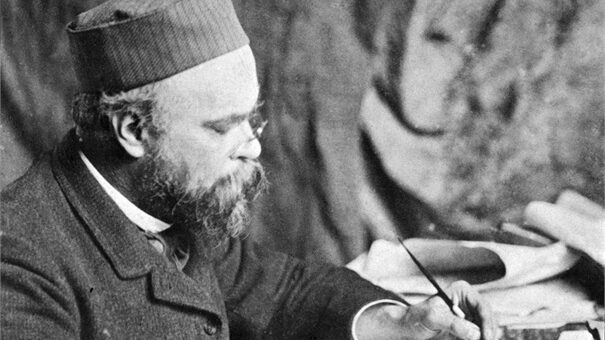
I will be premiering an excerpt ‘Paper River’ from my ancestral poetry film novel project Tree, created from 25 years of research. Tree focuses on the land and uncovering my family’s occupations across time. Paper River centres on events at my great grandfather’s paper mill on the River Culm in Devon during the First World War, alongside the site in the present day. It includes a poetry film; a read extract of documented facts and prose poetry.
This year’s event is titled: Expressing the Earth in the Year of Indigenous Languages and the
the inspiring programme is here: http://www.geopoetics.org.uk/geopoetics-conference-2019/ https://www.facebook.com/ScottishGeopoetics/ and see posts by Norrie at https://www.facebook.com/norman.bissell.writer.

Janet Lees in Lapidus Journal includes Liberated Words workshop
See the latest edition of Lapidus Journal for some valuable insights, including Janet Lees’ informative article on poetry film and wellbeing. Thanks also Janet for selecting Butterflies Haven workshop with Helen Moore and Howard Vause. A great team to inspire anyone.
COLLABORATION panel discussion at Saboteur Awards Festival May 18th
Looking forward to seeing all the presentations and workshops at the Saboteur Awards Festival on May 18th, and taking part in a panel discussion on collaboration and The Book of Hours https://thebookofhours.org/ with poet Lucy English and Helen Dewbery of Poetry Film Live and Elephant’s Footprint. We aim to discuss the collaborative process and share some of the challenges and benefits of cross genre art forms. Also presenting on the 18th are Daniel Davies Wood, Charlie Hill and Ruby Cowling, Jade Cuttle, the Northern Fiction Alliance. https://sabotagereviews.com/2019/04/13/saboteur-awards-festival-2019-programme-details/
Uprooted at LYRA the new Bristol Poetry Festival
UPROOTED NEW DATE!
LYRA, Bristol Poetry Festival
The main auditorium, Arnolfini Art Gallery, Bristol
Saturday 13th April, 7 p.m.
Rescheduled due to technical issues, the good news is that we are now screening in the evening on Saturday 13th April in the main auditorium. So come along!
Spoken word poet and LYRA Poetry Festival co-director Lucy English, and poetry filmmaker Sarah Tremlett, co-directors of Liberated Words CIC Poetry Film festival and workshops will be presenting Uprooted – a touring screening of short films by international poetry filmmakers on the refugee crisis and migration. Our aim is to show how artists can provide a different, more empathetic view than is portrayed in the media. We have films from artists such as: Ghayath Almadhoun and Marie Silkeberg, Jan Baeke, Alfred Marseille, Maciej Piatek and poet Hollie McNish, as well as our own work, so please drop by, all welcome.
Previous screenings: North Cornwall Book Festival; Bath Spa Empathy Conference, 2018.: ‘Thought provoking and so many different types of film’; ‘Really revealing’; ‘We really support what you are doing’; ‘Powerful – and giving artists a voice’ ‘How do you make poetry films?’ The films generate a big response; the audience all cheered at Holly McNish’s film: Mathematics. www.liberatedwords.com


2nd Newlyn Film Festival
Spring is not far off and Newlyn Film Festival (5th-7th April) https://newlynfilmfestival.com/2019-festival/ is beckoning once again for its second year. I am very pleased to say that Lucy and myself have been invited to judge the poetry film strand once again – and we are looking out for your inspiring entries. As the festival notes they are looking for ‘core vision’ for entries of six minutes or less, with a winner’s award and certificate. Please note that the deadline has been revised to February 28th. Last year’s poetry film winner was Dave Richardson with Love’s River of Errors. I interviewed Dave about the film – ‘Unchartered Terrain: The Personal Within’ which you can read in Home Page Screenings.
There are also £100 prizes for: best fiction film judged by Maria Livesey, who has vast experience in all areas of broadcast television; best documentary judged by Cornish-born Martha Dixon, who is both an experienced investigative journalist in the field and producer; and best animation by Morgan Francis (Spider Eye) who has an established career directing highly successful animated short films for major broadcasters. There are also trophies and award certificates for best student film, judged by the talented video artist Martin Rieser (known for sublime interactive installations); and the new and interesting category best short screenplay judged by Dr Martin Kiszko, with award-winning scores and screenplays; there are also categories for best feature film and best Cornish film. Located in the historic Acorn Theatre, Penzance, festival founders Diana Taylor and Anthea Page from Redcliffe Films in Bristol, have set a standard for innovative and yet warm, celebratory screenings with a festival party to remember, so don’t miss the chance to be there!
Dave Richardson – Unchartered Terrain: The Personal Within
Since beginning as a poetry film festival curator in 2012, and having the dubious task of dividing films neatly into themes, there has been a recurring thought gathering in my mind. What about the poetry films and video poems that are so deeply personal, so profound, that they seem to transcend all categorisation? The videopoem, constructing all elements concurrently, provides the perfect medium for the instinctive (sketchable, doodle-like) play and discovery of the auteur; and provides a good outlet for the confessional diary form, reaching right into the psychology of the person behind both the lens and the pen.
American video poet and graphic designer (teaching interactive and motion design) Dave Richardson https://vimeo.com/daverichardsondesign was the winner of the poetry film section of the inaugural Newlyn Film Festival, (Cornwall, UK, 2018) which I co-judged with poet Lucy English. Love’s River of Errors (Richardson, 2016) begins by announcing in brackets after the title the small phrase ‘after my sister’s death’ and from that moment we are placed to walk beside him for the next three minutes. Told directly, in the first person, both explanatory and conversationally confidential, we are drawn closely into the turbulence of his life experience; and, to emphasise the personal nature of the content, the footage captures his hands or brush onscreen in the act of making a cut-up or collage. This feels like a cathartic act, betraying the emotional psyche that is set against, and amplified by the control of the voice. The film is a type of memorial, suggesting what cannot be said in words. Without sentiment, we hear both the good and bad: the love of the sea against the unreturned phone calls and the kidneys shutting down due to alcohol poisoning; the singing at Dave’s wedding and yet Dave finding the memories intruding into his work life. The difficulty of creating such a work becomes clearer when you realise that the ‘sister’ is in fact a brother, being too close to bring to mind. Dave creates short slices of life writing that knock you over with their profundity.
ST: You studied graphic design – did you always write poetry? And when did you first want make video poems? Did you progress from making adverts and the design of type, to including your own narratives?
DR: I wrote poetry from grade school through college and beyond, and then I stopped for quite a while when I started working as a graphic designer. I just got more interested in visuals and type, the shape of words on the page, and not necessarily the words. It was pretty exciting to switch to graphic design in my early 20s. Typography, and its rich history, was an eye-opener.
I worked as a graphic designer for about 15 years or so, then started teaching visual design at Southern Utah University, after I completed my MFA at Indiana University in Bloomington, Indiana, and that’s when I started working with Danielle Dubrasky and her wonderful poetry. We did a few projects together, in which I did all the visualization in Flash at the time. I also started teaming up with poets through bornmagazine.com and I did a few pieces for born. I really enjoyed it, and started writing more “poetry” again. I guess I have always been journaling and doing free-form sketches in a notebook for years now, so that’s pretty constant.
ST: I would say that it is quite unusual for a graphic artist to have such a delicate, personal approach to subject matter. Often people use graphics as play or visual objects to deter from the subjectivity of the filmmaker. Do you have any comments on this?
DR: Thanks for saying delicate. And personal. When I first started working with typography and images, I was pretty inexperienced, and didn’t appreciate the nuances much. But then I really started to look at type, and how images and type work together, and maybe sometimes a nuanced approach comes forward. I think I sense when things are too heavy now, or when things asre too expected, and I try to edit down to what matters. Maybe that helps in the process.
ST: In Love’s River of Errors you have focussed on unpicking your own feelings towards a deeply personal and tragic experience. In Migrations (which actually makes me cry, as I have two girls who have ‘migrated’) and now Cathedral you have also chosen personal subjects. Can you talk about this a bit more? Why you choose these very personal topics.

Love’s River of Errors

Migrations
DR: Love’s River of Errors was the hardest and the best process so far. My youngest brother died of addiction almost two years ago, after keeping his struggles hidden from our family for a long time, and it is still hard to talk about. But I knew I wanted to make something of the experience, to make something honest, and so I started making collages and experiments in AfterEffects to get at some of my feelings of loss. It was definitely back and forth between writing and making, and it came together in about two weeks… I finished the first draft, took a break, and wasn’t able to return to the piece to make changes that needed to be made. I just had to stop. I didn’t have the energy to make adjustments. In the writing, I also had to change “my brother” to “my sister” for some emotional distance. It wasn’t working otherwise.
And I think this personal feeling comes from my journals/notebooks, again. If I keep revisiting certain episodes in life, I see them over and over in journals, repeating, thoughts on experiences, or just a few phrases. Or I doodle the same image over and over. After a few months of writing and drawing, I flip through several journals, and sometimes years of journals, in one sitting, and you know, you see the shape of your days and months on paper. It builds up, I guess. You have to respond.
ST: You seem to self-examine in relation to subjects that are deeply affecting. It is the psychology of your works, the sense of the film coming directly out of the filmmaker’s psyche – almost self-analysis as we watch, that is so compelling. What do you think?
DR: That’s a good analysis. I haven’t thought about it that deeply, to be honest. I know some narratives feel more urgent in the telling and the creation, and those are more personal. The specific personal journeys each of us take always seem to relate to the general, to everyone’s experience in daily life, and those resonate more. I’m just glad to get wonderful feedback now and then when I put something out there.
ST: Your spare, direct delivery, situates the viewer right beside you, not as witness but as something else. Where do you think the audience sits?
DR: Most of the time I feel most comfortable constructing narratives that speak directly to someone, to the viewer, as if to a good friend. It’s natural in my writing. Again, I think it comes from the journals. A lot comes from the journals/sketchbooks!
ST: You use few words that are prose but highly loaded with emotional meaning rather than rhetoric, yet the emotional is balanced with a sense of perspective in the delivery. What do you think about how you construct the writing and how you balance these forces verbally when the sound is recorded?
DR: My journalism training in college told me to cut and cut to what matters. When I started to do that with the more poetic stuff, it felt more authentic, like my real voice. I try to keep it simple so that I am not trying to over-write. Many times I stop with the second draft of the text, just to not over-think.
ST: In relation to that, often you have different text on screen to the voice-over – is this something deliberate and is there a point behind this? It is difficult to get this right and quite an art.
DR: I did some experiments with Flash years ago, where I was randomly coding phrases to interact with randomly loaded images, and I was enthralled with the endless results and connections that were unexpected. That randomness, just a quality of unexpected relationships between image and text — I try to recreate that in my work for fun, for the pleasure of seeing what might surprise me. It makes new meaning for me. And then I edit.
ST: Do you have any favourite poets or influences in film or graphics?
DR: I don’t watch much film poetry. I used to view quite a bit of film poetry, and then I got very envious and felt a bit unsure, so I stopped. It hindered my ideas. Now I pay attention to design firms, animators, motiongraphers, all within the graphic design realm, or close to it. I’m still very firmly connected and inspired by graphic design, especially graphic design in motion. Mac Premo is a recent favourite of mine. Amazing work, really mixing genres, and a wonderful storyteller. Highly recommended.
ST: On A Prophet by Kathleen Roberts (and which won best editing in LW 2014 festival) of course is also about dealing with the death of a loved one – did you go to her or the other way round in terms of making the film and can you say more about that film?
DR: Kathleen had a call for collaborators for an upcoming show, and I answered it and chose a poem that I could work out in my garage. Very practical! For that film I did lots of typography experiments with pages of type hanging on our clothesline, blowing in the wind, filming them, reworking them in AfterEffects, and none of that made the cut, by the way. Still looking for a use for that footage. My wife was the main character, and I thank her again for her patience on the third and fourth filming.
ST: The music in Cathedral – why did you choose that?
DR: I wanted something that was a bit off, somewhat unsure. Picking through audio online, I dropped that music into Cathedral and it completed the piece to me. Just felt right with the tone of the imagery and writing.
Dave Richardson
http://vimeo.com/daverichardsondesign