MALDITO videopoetry festival on the horizon with auspicious dates 31st Oct – 5th Nov
This is a wonderful festival based in Albacete, Spain, that celebrates video poetry amongst all kinds of performance – as happy amongst live bands and VJing as in a quiet, reflective cinema. And following its raunchy and evocative name – Maldito means ‘Damned’ – the event links two feverish dates: Halloween and Guy Fawkes night (okay only British people might understand the spooky and fiery connection here!). Congratulations to the team of organisers and director Javier Garcia for bringing this exciting event together, now in its seventh year. Maldito is something that you really need to celebrate in situ – my slow attempts and false starts at learning Spanish aren’t helping here! Happily there is a healthy online presence for some of the longer films available at ON-LINE | FILMIN www.filmin.es/festival/maldito-festival.

They say: The festival is organized by non-profit Association Cultural Maldito; formed by a small team of professionals from the film industry, poetry and culture in general. The MALDITO team, as lovers of poetry, image and the expressive possibilities of their symbiosis, intend to promote their approach to the public, either with the events of the festival or with the educational activities that we carry out.
The PROGRAMME is available HERE

To make things more interesting it also includes 1st, 2nd and 3rd prizes alongside an Audience award, and also a section for longer films, documentaries etc. I am very proud to say that my film with Ian Gibbins and Mary McDonald – Climate Change and Subjectivity, first screened for REELpoetry 2023, will be part of this really interesting section, alongside a creative tour-de-force and very moving autobiographical narrative film by Jack Cochran and Pamela Falkenberg.

There will also be a section on the winning films from each edition of the festival over the years. I am also really happy to say that my film on view at Selfie with Marilyn, featuring XaiLA with compelling poem by Heidi Seaborn, will be part of that. It sounds a really rich curation with films of varying approaches and from many different countries.


They say:
WINNING VIDEOPOEMS PREVIOUS EDITIONS
‘Within the established schedule you will be able to enjoy, free of charge, an uninterrupted screening of the winning video poems from all editions of our International Video Poetry Contest , which in this VII Edition will be held on October 31 at the Teatro Circo de Albacete.
A collection that offers us a panoramic vision of what is happening in the world , and, what is even more significant, in the artistic field. Here we find what inspires and excites us, as well as the artistic trends that emerge in other disciplines. It is an authentic reflection of the artistic and, of course, social panorama. An opportunity to see high quality works, creations by artists from all over the world, who use various visual techniques and poetic styles to elevate this genre to the category of art.’
And, by the way, the website is looking, well, wicked…
CONGRATULATIONS to everyone at MALDITO!
¡FELICITACIONES a todos en MALDITO!
Frame to Frames: Your Eyes Follow finalists for FOTOGENIA 2023
A Word from the Director – Sarah Tremlett
I am really pleased to announce the finalists of Frame to Frames: Your Eyes Follow ekphrastic poetry film prize for 2023. I am very proud to say that the screening will be part of the exciting programme at FOTOGENIA 2023, Mexico City, November 22nd to December 2nd. ‘The Special Programme Frame to Frames II will be screened at 4 p.m. on Saturday, December 2nd at Complejo Cultural Los Pinos (Calz. del Rey S/N, Bosque de Chapultepec I Secc, Miguel Hidalgo, 11580 Ciudad de México, CDMX).’
Steered by the leading festival director Christian Pacheco-Cámara (Chris Patch) this event gets better and better every year and is one of the most artistic, avant-garde and experimental out there, so try and make it if you can. I look forward to meeting Ana and Chris in person!
Ekphrastic poetry films in the Frame to Frames: Your Eyes Follow prize are based on works of art, whether paintings, sculptures, prints etc. This is the second year I have organized a screening on this fascinating subject, and I am also honoured to have secured an inspiring festival painting – Huapango Torero – by Mexican artist Ana Segovia, courtesy of the Karen Huber Gallery, Mexico City. Filmmakers were invited to submit a film based on their own choice of artwork or the festival painting itself. I personally found Ana’s subject matter to be rich with associations and deep emotional connections. The strong links between outdated patriarchal politics and cruelty to animals cannot be avoided. I must have had some sense of the painting’s power in that two-thirds of the submissions were based on this arresting and thought-provoking work. We have a truly international group of artists and I hope this collection inspires many of you to submit in future years.
This year I am joined in the judging by two esteemed leaders in the field: Canadian prize-winning digital media artist, Mary McDonald and American ekphrastic poet, cross-media artist, scholar, educator and multiple award-winner and nominee Janée J. Baugher, MFA (Seattle, Washington). Author of the leading work on the subject The Ekphrastic Writer (McFarland, 2020) Janée has been kind enough to contribute a few words on why ekphrastic poetry means so much to her.
Janée J. Baugher
‘I am a writer who is intrigued by collaborative opportunities between cross-disciplinary artists. As a young literary artist visiting the NYC Guggenheim for the first time many years ago, I became so entranced by the Georg Baselitz painting, Der Dichter, I not only wrote my first ekphrastic poem while sitting on the floor before the painting, but my sense of the aesthetic possibilities of the world changed forever. Since then, I’ve spent my life writing in museums worldwide, which has culminated in hundreds of pages of ekphrastic writing, including the poetry collections, Coördinates of Yes (Ahadada Books, 2010), The Body’s Physics (Tebot Bach, 2013), and the craft book, The Ekphrastic Writer: Creating Art-Influenced Poetry, Fiction and Nonfiction (McFarland, 2020).
When we stimulate the eye, that sight can lead to insight. Paul Valéry wrote, “One makes use of images in order to guide oneself, to please oneself, to heal oneself, to know oneself,” and it’s the question of where vision can lead a person that consumes me. As an educator, I’m best known for my ability to teach creative writers how to master description (i.e., “ekphrasis”), which is best learned through studying the visual arts. Some might wonder, as an aesthetic pursuit, what currency does ekphrastic writing hold? To the literary canon? To the art world? To the general public? Making creative use of visual stimulation is a bio-psycho-social experience. And, what’s crucial, as Thoreau wrote, “is not what you look at, but what you see.” Giving your full attention to artwork can feel meditative, and it can also feel dramatic, as in Stendhal’s experience. Art-viewing is an important type of play that can provide a conduit and a framework for the imagination, for it opens a world of speculation, surprise, and discovery.
Traditional ekphrastic writing has limitations, namely the absence of auditory and kinetic components. Film—motion pictures—provides the unique medium by which creators can juxtapose soundscapes with both static and moving imagery. Unlike what I’ve ever accomplished on the page, these types of filmmakers conjoin image-text-sound to create an interdisciplinary experience. Though at their core, poetry filmmakers and ekphrastic writers have similar aims: we value collaboration, spontaneity, chance, and beauty.’ Janée J. Baugher, ekphrastic poet and scholar
And a few comments on being inspired by the ekphrastic process
Colm Scully – why he loves Ekphrastic Poems
‘I love writing ekphrastic poems. However when reciting them it always seems necessary to let the audience see the piece of art you are writing from, by holding up a picture or using a projection. How else can they truly appreciate what you are trying to say. The joy of poetry film is that in this case it serves both purposes, allowing you to perform your poem, while simultaneously allowing you to illuminate aspects of the art through a cohesive single work. Poetry Film often works best when it is simple, and ekphrastic poetry film allows this to happen more naturally. Sometimes just a snapshot of a painting may suffice, sometimes a more complex endeavour is required to let the poem and art coexist.’ Colm Scully, poet, poetry filmmaker and curator

Huapango Torero by Ana Segovia courtesy the Karen Huber gallery
Dr Meriel Lland – Why did the artwork Huapango Torero inspire you?
‘I have a long-standing interest in the art of Mexico and women’s self-portraiture in particular. Ana Segovia’s painting Huapango Torero and the image of the same name that inspired it, had a powerful impact on my thinking. The apparently simple act of offering a fighting bull a flower is loaded with complexity. It led to research into bullfighting in Mexico City (which has only recently been banned in 2022) and into related gendered issues and versions of machismo and maleness. Segovia represents herself within the painting offering the flower as a gentle, compassionate gesture against violence. I find this gesture full of hope.’ Dr Meriel Lland, poet, nature photographer and poetry filmmaker
Carlos Ramirez Kobra – Why did the artwork Huapango Torero inspire you?
‘Due to the environment in which it takes place and the name of the work that permeates the texture of the son huasteco, the guapango that is part of the culture of my mother’s birthplace and this audiovisual writing exercise became a journey of return. I was inspired by the mountain range that housed my childhood and now that my mother has passed on I have taken the opportunity to pay tribute to her and to the land that saw me grow up.’ Carlos Ramirez Kobra, poet and audiovisual artist
Penny Florence – Why did the artwork Huapango Torero inspire you?
‘I love the way Huapango Torero foregrounds responding to previous work, while shifting it into the present. We are invited to enter into histories in ways that engage with them in non-binary ways: there is immediacy, but not past-present; individual creativity, but acknowledging shared elements; sexual difference, but non-binary.’ Penny Florence, artist, educator, theorist
THE FINALISTS

A New History, Patricia Killelea
A NEW HISTORY
Patricia Killelea
Painting: Huapango Torero, Ana Segovia
Poem: Patricia Killelea
Video Clips & Production: Patricia Killelea
Translation Assistance: Lisandra Perez
USA, 2023
Inspired by Ana Segovia’s painting Huapengo Torero, A New History is an author-made poetry film celebrating the act of crossing over into a new way of life— one that challenges stereotypical conceptions of gender, animal-human relationships, and desire. Armed with flowers and desire instead of instruments of war, the figure steps into the field of the future. In doing so, she comes face to face with mystery and the possibility of transformation.

Patricia Killelea is a writer and multimedia artist living in the rural Upper Peninsula of Michigan. Her poetry films have been screened at Det Poetiske Fonoteque: Nature & Culture Poetry Film Festival, Ó’Béal, Rabbit Heart and received Honorable Mention at the Midwest Video Poetry Fest.
Patricia’s poetry films and essays on videopoetry have been featured at FENCE, Poetry Film Live, Atticus Review, and Moving Poems.
Her poems have appeared in numerous journals, and her most recent poetry collection, Counterglow, was published by Urban Farmhouse Press (2019). She was Poetry Editor at Passages North from 2015-2022 and recently became a Poetry Editor at FENCE. She is an Associate Professor of English at Northern Michigan University. www.patriciakillelea.net
THE FALL OF LILITH
Tova Beck Friedman
Painting: Lilith, 1887, by British Pre-Raphaelite painter John Collier,
Atkinson Art Gallery, Southport, England
Poem & Video: Tova Beck-Friedman
Translator: Odeiny Gavira Tejeda
Music: Kamila Kustar
USA, 2023

The Fall of Lilith is an ekphrastic video poem inspired by the painting Lilith, by the Pre-Raphaelite British painter John Collier (1850–1934). Lilith’s story is part of the pantheon of narratives centered on the female archetype. Like all such mythological tales, hers begins as seen through the male gaze. I have recreated her story through a contemporary lens.
While Collier paints Lilith as a seductive woman, standing with a snake wrapped around her naked body, in my interpretation of Lilith (in both poem and video), she is a strong woman who was wronged by the Patriarchy and who becomes an archetype of contemporary womanhood. The video borrows from the old silent-movie style. This choice of outdated method of presentation reflects both conceptual and technical archaic approaches to Lilith’s story.

Tova Beck-Friedman‘s work is rooted in fine arts. After years of working in sculpture and sculptural installations she has come to embrace films and poetry, fusing poetry and moving images to create cine-poems.
Her work has been shown in festivals, museums, galleries and on television including: , The Poet House, NYC; VideoBardo Argentina; Drumshanbo, Ireland; Ó Bhéal, Ireland (shortlisted); International Video Poetry Festival, Greece; The Film & Video Poetry Symposium, USA; Blissfest333, USA, REELpoetry, USA; International Poetry Film Festival of Thuringia, Germany; Fotogenia, Mexico.
Her poems have been published in Whispers and Echoes magazine, Extinction Rebellion Creative Hub and Fevers of the Mind. Her poem Vertigo, is part of the Starry Night Anthology of The Ekphrastic Review. The poem Hair is part of the Fevers of the Mind Poetry Anthology. http://tbfstudio.com
RESIST EXIST
Alejandro Thornton
Painting: Huapango Torero, Ana Segovia
Concept, video poem, music: Alejandro Thornton
Argentina, 2023

Resist / Exist, Alejandro Thornton
Resist/Exist is a videopoem based on the painting Huapango Torero by Ana Segovia that tries to rethink, with a play on words and in a poetic way, the conditions in which we inhabit this world, how to confront the abuses of our rights and of our cultures by colonization and globalization.

Alejandro Thornton is an Argentinian artist, visual poet and Professor and researcher at the Department of Visual Arts of the National University of the Arts (U.N.A.).
He has been published in numerous magazines and anthologies e.g. Traces of Argentine Visual Poetry (2014), Poéticas Oblicuas. Modes of Counterwriting and phonetic twists in experimental poetry 1956-2016 (2016), …xyzA-Cdef… Anthology of Argentine Catalan Visual Poetry (2019), Proporción Aurea (2023) and Visual Poetry. An Argentine and Brazilian anthology (2023).
Recent publications include:Poemas Libres (Ireland, 2022);Aquiahoraotravoz together with JM Calleja (Ireland, 2021); Portraits of Solitude (2020); Abracadabra (2017)). In 2021 he won the III Paqui Jimenez Yepez International Visual Poetry Prize (Spain). https://alethornton.wixsite.com
INTERIOR GROUP PORTRAIT OF THE PENROSE FAMILY
Colm Scully
Painting: Interior Group Portrait of the Penrose Family, 1776, by Robert Hunter,
Crawford Art Gallery, Cork, Ireland
Director: Colm Scully
Poet: Colm Scully
Editor: Colm Scully
Music: J.S. Bach
Ireland, 2021

Interior group portrait of the Penrose family, Robert Hunter, 1776, Colm Scully
This portrait of a wealthy 18th-century Cork Quaker family hangs in the Cork City Crawford Gallery. A number of years ago the gallery had a competition to write a poem about your favourite piece of art. I wrote this poem and more recently turned it into a poetry film. Looking up local phone directories, I found no entries for Penrose, even though the family lived here for several hundred years before returning to England, and were connected with very important figures in Irish nationalism. I try to elucidate the poignancy of this in the film poem.
 Colm Scully is a poet and poetry film maker from Cork, Ireland. His films have been shown internationally and he recently won The Deanna Tulley Multimedia Prize, 2022.
He is curator at Drumshanbo Written Word Poetry Film Competition, and judge at O Bheal Winter Warmer Poetry Film Prize. His poems have been published in many journals including Poetry Ireland Review and The Friday Poem. You can learn more at colmscully.com.
SELF PORTRAIT WITH A LINE FROM LORCA
Janet Lees
Painting: Huapango Torero, Ana Segovia
Director: Janet Lees
Poets: Lois P. Jones & Elena K. Byrne
Editor: Janet Lees
Music: Yehezkel Raz feat. Sivan Talmor
Cast: Narrator Mónica Zúniga
Translation: Camilo Bosso
UK & USA, 2023

Self Portrait with a Line from Lorca, Janet Lees
A film inspired by the poem ‘Self Portrait with a line from Lorca’, by Lois P. Jones and Elena K. Byrne, which in turn is inspired by the painting Huapango Torero by Ana Segovia. I wanted to honour the spirit of both, which speak to different ways of relating with other beings and with ourselves. The dancer I filmed at the Casa Fortaleza de Emilio el Indio Fernández in Coyoacán, Mexico City – and the narrator in the film, Mónica Zúñiga, is an artist I met by chance on the same day. I wanted to include this Día de los Muertos dance, which echoes the dancing poppies earlier in the film, as a way of honouring the lives of the millions of bulls who have been killed in bullfighting; also to counter the machismo of the bullring, touched on at the beginning of the film, with a more open, creative and empathic energy. Reflecting the poem and the essence of the painting, the film moves from machismo and violence to the possibility of the death of these things.

Janet Lees is a lens-based artist, poet and poetry filmmaker. She won the 2021 Ó Bhéal Poetry-Film competition, and has been selected by such festivals as: ZEBRA Poetry Film Festival, the Aesthetica Art Prize, and Festival Fotogenia. In 2022 her work featured in the landmark exhibition Poets with a Video Camera: Poetry Film 1980 to 2020.
Her art photography has been exhibited worldwide and her poetry widely published in journals and anthologies. Her two books are House of water, a collection of poems and art photographs, and A bag of sky, the winning collection in the Frosted Fire Firsts prize, hosted by the UK’s Cheltenham Poetry Festival. https://janetlees.weebly.com/

Lois P. Jones’ first poetry collection, Night Ladder was published by Glass Lyre Press and was a finalist for the Julie Suk Award. She is the winner of the 2023 Alpine Fellowship in poetry and previous winner of the Bristol Poetry Prize, the Tiferet Poetry Prize and the Lascaux Poetry Prize. Jones’s work has been published or is forthcoming in the Academy of American Poets, Poetry Wales, Plume, Guernica Editions, Agenda and elsewhere. Since 2007 she has hosted KPFK’s Poets’ Cafe and acts as poetry editor for the Pushcart and Utne prize-winning Kyoto Journal. https://www.loispjones.com/
Elena K Byrne

Former Regional Director of the Poetry Society of America, final judge for the PEN’s Best of the West Award, the Kate & Kingsley Tufts Poetry Awards, and the international Laurel Prize, Elena Karina Byrne is a freelance editor, professor, Programming Consultant & Poetry Stage Manager for The Los Angeles Times Festival of Books. Her five poetry collections include If This Makes You Nervous (Omnidawn Publishing, 2021). Elena’s work can be found in Best American Poetry, Pushcart Prize, POETRY, Paris Review, APR, Poetry Daily, Verse Daily, Oxford Review of Books, BOMB, and elsewhere. https://www.elenakarinabyrne.com
NIGHT IS PAPER
Martin Sercombe
AI Imagery created in Midjourney
Director: Martin Sercombe
Words: Thom Conroy, Martin Sercombe
Music: Holizna, Language Removal Services, Ben Stepner and Jaap Blonk
New Zealand, 2022

Night is Paper, Martin Sercombe
Night is Paper is a cinepoetic collaboration with novelist Dr Thom Conroy. The artistic process began with a series of images generated in Midjourney, using artificial intelligence. The images prompted a sequence of text-based fragments which combine to evoke a sense of eves-dropping into a shadowy, indistinct world where nothing can be fully understood. A mix of found sounds and electroacoustic music from the Free Music Archive build upon this mood of unexplained mystery.
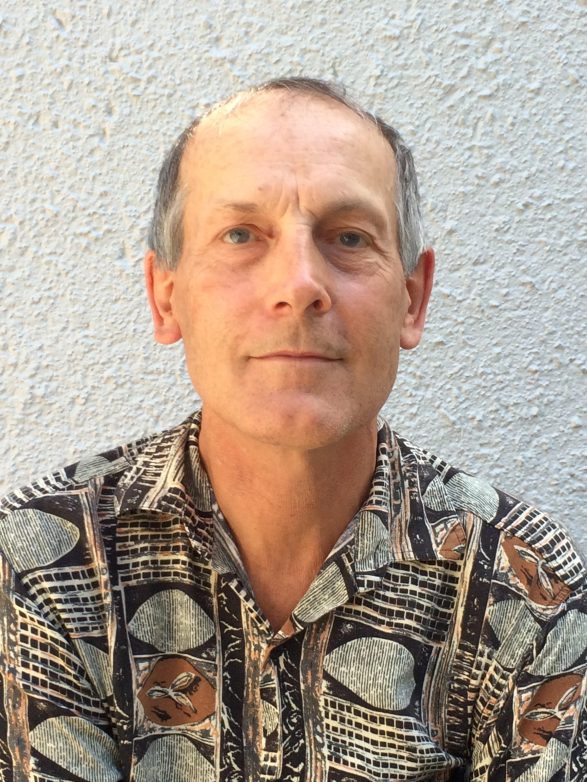
Martin Sercombe began making artist’s films in the 1980s, supported by Arts Council England and other funders. Over the years he has worked extensively with other artists and composers on work that explores the boundaries between poetry, animation, music and performance art. His video production company, Media Projects forms partnerships with community groups and institutions to produce short films exploring heritage, the arts and social issues. https://martinsercombe.com/

Thom Conroy co-wrote the script for the film ‘Night is Paper’ with Martin Sercombe during Martin’s residency as the Massey-Palmerston North visiting artist in 2022. Thom is the author of the novels The Salted Air and The Naturalist (Penguin Random-House) and the editor of the essay collection Home (Massey University Press). His short fiction, widely published in New Zealand and the US, has been recognised by Best American Short Stories and received other awards, including the Katherine Ann Porter Prize in Fiction. He is a senior lecturer in Creative Writing at Massey University, and the Editor-in-Chief of the journal Headland. https://www.massey.ac.nz/massey/expertise/profile.cfm?stref=552930
HUAPANGO TORERO
Pamela Falkenberg and Jack Cochran
Painting: Huapango Torero, Ana Segovia
Film: Jack Cochran & Pamela Falkenberg, Outlier Moving Pictures
Poem: ‘Huapango Torero’, extracted by Jack Cochran from ‘La Faena’ poem
by Bruno Enciso
Song: ‘Huapango Torero’ written by Tomas Mendez, performed by Laura Beltran
courtesy of Frontera Library (UCLA)
Additional paintings by Ana Segovia
USA, 2023

Huapango Torero, Pamela Falkenberg & Jack Cochran
A fiesta of intertexts inspired Jack Cochran’s found ekphrastic poem, ‘Huapango Torero’, which began with Sarah Tremlett’s selection of Ana Segovia’s Huapango Torero painting as the prompt for the Festival Fotogenia Frame to Frames challenge. However, this quickly expanded in a widening gyre to include what Segovia had to say about their Huapango Torero painting, as well as their other paintings. Also, other renditions of Huapango Torero, such as the Huapango Torero song written by Tomas Mendes and performed by Laura Beltran (courtesy of the Frontera Library, UCLA). We were also inspired by the poem, ‘La Faena’ by Bruno Enciso, from which Jack extracted a new ‘Huapango Torero’ poem, haunted by intertexts, as was the film we were inspired to make from it. This concludes with an art gallery fiesta inhabited by Ana’s paintings, Day of the Dead folk-art marionettes, and cross-dressing paper dolls. A result demonstrating that social constructs are not unmalleable truths, but instead subject to deconstruction and reconstruction that can change reality. Viva la differance!

Pam Falkenberg & Jack Cochran met in graduate school and made films together when they were young. Jack was part of the Iowa Creative Writing Workshop (and has written poetry all his life) and was working on a PhD in film studies when he left to pursue a career as a professional cinematographer.
Meanwhile, Pam stayed in school, got her PhD, and went on to become a film professor and experimental filmmaker, but eventually dropped out to work in visual display. They reconnected some thirty years later and formed Outlier Moving Pictures, honouring their new name by making technically innovative and poetic films about life, love, landscapes, social justice, and the environment. https://www.outliermovingpictures.com
THIS YARD
Csilla Toldy
Paintings: Laszlo Bujaki
Director: Csilla Toldy
Poem: Csilla Toldy
Hungary / Ireland, 2023

This Yard, Csilla Toldy
This Yard is a double-ekphrastic poem. The text came about through a poetic dialogue with Italian poet Viviana Fiorentino. The text of the poem is a response to her poem ‘Sedimentare’ or ‘Sedimentations’. The visual elements are based on Hungarian painter Laszlo Bujaki’s work, whose constant accompanying theme is the little doe represented in my poem by the ‘little hen’.

Csilla Toldy is a writer and translator from Hungary. Her writing has appeared in literary magazines and anthologies and in book form in three poetry pamphlets: Red Roots – Orange Sky (2013), The Emigrant Woman’s Tale (2015) and Vertical Montage (2018), as short fiction in Angel Fur and other stories (2019) and as a novel with the title Bed Table Door (2023).
Csilla creates film poems as a visual artist. Her award-winning work has been screened at international festivals. www.csillatoldy.co.uk
AFTER HUAPANGO TORERO
Finn Harvor
Painting: Huapango Torero, Ana Segovia
Director: Finn Harvor
Poet: Finn Harvor
Editor: Finn Harvor
Music: Finn Harvor
Canada, 2023

After Huapango Torero, Finn Harvor
A brief poetry film based on a work by Ana Segovia that illustrates nature in a time of the Anthropocene. Ancillary footage was shot in South Korea — which also feels itself under subtle but relentless pressure from climate change and ‘global fevering’.

Finn Harvor is an award-winning artist, writer, musician and filmmaker. He has had articles in many journals including the Brooklyn Rail and Canadian Notes and Queries. He has presented to academic conferences in Oxford, Bath, Liverpool, Berlin, Seoul, Osaka, Bologna, Madrid, Helsinki, and elsewhere. He has been selected by festivals in Korea, Ireland, the U.K., the US, Canada, Mexico, China, Kazakhstan, Australia, Greece, Pakistan, Serbia, Portugal, Italy, Germany, Ukraine, India, and elsewhere.
‘I’m particularly interested in the following themes: nature and the anthropocene, addiction and family dynamics (my late brother’s story), technology and contemporary war, and the nature of love. I usually make videopoems that I term authorial movies; these are movies in which one person creates — authors — all elements of the movie.’ https://bridgetextpress.weebly.com/
Y SUBO LAS ESCALERAS (AND I GO UP STAIRS)
Javier Robledo
Artwork: Visual Poem by Oliverio Girondo, Argentina. Ed Proa Publishing Society, 1932
Director: Javier Robledo
Poet: Javier Robledo
Edition /edición: 38 escalones
Music: Gyorgi Ligetty
Cast: Gabriel Espinosa, Adriana Saponko
Argentina, 2005

Y subo las Escaleras (And I go Upstairs), Javier Robledo
The scarecrow returns to human life and emerges from its immobility in search of fulfillment.

Javier Robledo is an Argentinian writer, performer, visual poet and the founder and director of VideoBardo International Video Poetry Archive and Festival. Originating in 1996 it is the oldest active festival in the world of its genre and has shown work in 21 countries.
He has made numerous video poems and exhibited and performed in numerous festivals in Argentina and abroad. He was co-founder of Impa La Fabrica cultural city, where he built and directed the Farbil Microcinema from 1999 to 2013 with poetry, video and performance activities, and Bardo, a poetry magazine, from 1996 to 2004.
He has published six books of poetry and one of stories. He received the Clamor Brezka Award from Vortice Argentina 1994 and the Editorial Poetry Award 3+1 25 years in 2018. Ed. Santillana included a visual poem of his in its manual for secondary students. https://videobardo.wixsite.com
HUAPANGO TORERO
Beate Gördes
Painting: Huapango Torero, Ana Segovia
Director: Beate Gördes
Editor: Beate Gördes
Music: Beate Gördes
Germany, 2023

Huapango Torero, Beate Goerdes
Inspired by Ana Segovia’s artwork Huapango Torero, the film presents human emotions in an experimental manner. Through poetic audiovisual elements, the film delves deeply into the intricate interplay of ambivalent hesitation and curious observation. The film illustrates a phase of intense tension. It immerses itself in the moment of observation, trembling, and excitement one experiences while making preparations from a (still) safe distance. By depicting the inner dynamics of this moment, the film creates an atmosphere that lingers between hesitation and action, thus generating an ambivalent and unsettling mood.

Beate Gördes has worked as a freelance artist since 1992. Her artistic work is multi-layered across all media and technologies, and video and sound have supplemented her artistic work since 2006.
She is represented in numerous exhibitions both in Germany and abroad. www.beategoerdes.de
SENSURIOUS / SENSORIALES
Ian Gibbins
Coloured Pencil Drawings: Judy Morris
Director: Ian Gibbins
Poet: Ian Gibbins
Editor: Ian Gibbins
Music: Ian Gibbins
Cast: Ian Gibbins (spoken word)
Translation: Ian Gibbins (2023)
Australia, 2016

Censorious / Sensoriales, Ian Gibbins
‘This, then, our new world, serried with vigilance, chromed with unrecorded opportunity… Who will catch your tears before they dry? Save some meteor for me… the roots, leaves, flowers, fruits that stimulate our senses … ‘
Text was written to accompany an exhibition of an extraordinary series of drawings – Sensurious – drawings to stimulate the senses by Judy Morris exhibited at The Gallery @ Pikes, South Australia, in 2014 and again at Magpie Springs, South Australia, autumn/winter 2014/15 with accompanying poems by Ian Gibbins.
From Judy’s website: ‘These works are a celebration of produce from the garden, vineyard, orchard, or greenhouse that we collect for our kitchens and dining rooms and in most cases eventually consume! The pleasure we gain from this produce is amplified by simultaneous stimulation of multiple senses – vision, touch, smell, taste and even sound – and can be further enhanced when we grow the produce ourselves. Such stimulation forms memories so vivid that the full sensory experience can be evoked in the future by just a quick glimpse or whiff or feel.’ https://www.judymorris.net.au/the-natural-world/sensurious/

Ian Gibbins is a poet, video artist and electronic musician living in South Australia. His poetry has been widely published in Australia and overseas, and includes four books, two of which are collaborations with visual artists.
His award-winning poetry videos, video art and soundscapes have been exhibited to acclaim at festivals, installations, galleries and high-visibility public art displays around the world.
Until he retired in 2014, Ian was an internationally recognised neuroscientist and Professor of Anatomy at Flinders University, South Australia, having originally trained as a zoologist. www.iangibbins.com.au

Judy Morris is a fine artist, based in the Adelaide Hills of South Australia. She interprets the natural world in drawings that emphasise the contours and textures of animal and plant forms, exploring their intricate beauty on the macroscopic and microscopic scale.
One focus is the human body, with pencil and charcoal drawings of the human form interacting with the everyday world. Recently, she has concentrated on contemporary botanical drawings in coloured pencil, bringing attention to the wonders of plants and their importance in our natural environment. See https://www.judymorris.net.au/
FLOR DE CRISTAL / CRYSTAL FLOWER
Carlos Ramirez Kobra
Painting: Huapango Torero, Ana Segovia
Director: Carlos Ramírez Kobra
Poet: Carlos Ramírez Kobra
Editor: Carlos Ramírez Cobra
Music: Carlos Ramírez Kobra
Photography: Omar Ulises Plata Castillo
Mexico, 2023

Flor de Cristal / Crystal Flower, Carlos Ramirez Kobra
Crystal Flower is a piece of audiovisual writing based on a process of ekphrasis that takes as its starting point the work Huapango Torero by the Mexican artist Ana Segovia. It combines writing on images of the Huasteca Hidalguense and the process of returning to a town where are left the remains of a mother who has passed to another existential plane. All of the above is superimposed on the idea of the discovery of God enclosed in a crystal flower.

Carlos Ramírez Kobra was born in Neza (MX) in 1984. Poet, publicist and cultural manager, he is coordinator of the PLACA Platform in Mexico, managing cultural events such as the Chilango Andaluz Poetry Recital, the Gabinete Salvaje or the Festival de los Barrios. His poems have been published in various magazines and anthologies in Mexico and Spain; in the plaquettes Los Salvajes de Ciudad AKA (Deleátur) and A word with a bullet name (Dos10 Studio digital) in the collection of poems Own Dream Code (Editorial Ultramarina C&D 2020), dios un pixel (Centro Cultural Digital 2022), and Visual Trance (Malviaje , 2023). His audiovisual pieces have been selected by numerous festivals around the world. He has worked for 17 years with poetry projects that are in dialogue with other artistic expressions. https://carlosramirezkobra.com/
IT AIN’T WHAT IT SEEMS/ NO ES LO QUE PARECE
Penny Florence
Painting: Huapango Torero, Ana Segovia
Director: Penny Florence
Poet: Penny Florence
Editor: Penny Florence
Music: Silent
UK, 2023

It Ain’t What it Seems / No es Lo Que Parece, Penny Florence
A silent visual poem that responds to selected works by Ana Segovia, especially Huapango Torero, 2019 and It’s not what it looks like, 2023. All the visual elements derive from her work, as is gradually revealed throughout the film-poem. This is directly inspired by her response in La Faena. The words and wordplay move between English and Spanish (and occasionally other languages), exploring shared features and divergences, especially where gender and sexuality are involved. The translations are deliberately taken from Google Translate. While I do not speak Spanish, I do speak French and German, and have a life-long scholarly interest in etymology, digital poetry translation and linguistics. Drawing on the above, the film-poem seeks to move around Ana’s work in a sympathetic version of analysis, shifting the ground of ‘criticism’ towards shared inquiry and ‘the pleasure of influence’.

Penny Florence is an inter/cross/un/disciplinary artist and writer, and a feminist materialist who struggles with ‘isms’. She is based in West Cornwall, where she exhibits digital poetry, films and mixed installations, especially, but not exclusively, as a member of the Newlyn Society of Artists (NSA).
She has performed readings in various galleries in the UK and internationally, the most visible of which include Tate Modern and Tate Britain. She has worked in universities, while resisting the label ‘academic’, and her books, articles and papers are fundamentally concerned with the forms and processes of thinking and their intersection with what we call art and media. Appointments include: Head of Research Programmes at The Slade School of Fine Art (including leading the practice-based PhDs); inaugurating and running the first PhD programme at Falmouth University (also practice-based); and Chair of Humanities and Design Sciences at Art Center, Pasadena, USA. www.pennyflorence.com
A LOVE SPELL CAST IN PETALS
Meriel Lland
Painting: Huapango Torero, Ana Segovia
Words and concept: Meriel Lland
Photography and camera: Michael Leach and Meriel Lland
Editing: David Lland and Meriel Lland
Animation: David Lland
Sound: David Lland
Translation: Camilo Bosso
UK, 2023

A Love Spell Cast in Petals, Meriel Land
A love spell cast in petals weaves together threads from many sources. Most importantly, Ana Segovia’s flower offering in her painting Huapango Torero – and the painting of the same name that inspired it – but also the 1950s Lola Beltrán song ‘Huapango Torero’ and the once banned 1936 children’s book The Story of Ferdinand by Munro Leaf. The film-poem explores what happens when we dare to think differently and challenge the cruel stereotypes that misrepresent and trap a living being. It refuses the theatre of machismo to remake old understandings of bulls and of men. The painter is a peacemaker, she invites new dialogues and encourages forgiveness and an end to violence. She is a sorceress casting a spell of hope.

Dr Meriel Lland is an ecopoet, author, photographer, artist and film-poet. Until recently, she was Creative Writing Programme lead at Manchester Metropolitan University. She has worked with BBC Wildlife, RSPB Birds, National Geographic, Birdwatching magazine and the Natural History Museum. Meriel investigates biophilia, ecology and wellbeing, encouraging communities to reconnect and care for the planet.
Her work has been exhibited internationally at: ZEBRA, Berlin; Cyclop, Kyiv; Liberated Words, Arnolfini, Bristol and Bath, Encounters Short Film Festival, Bristol;; REELpoetry, Houston; art en nature en art, Galerie du Château Sainte-Croix-de-Mareuil, Dordogne, France and many others. She is co-author of 18 books translated into 16 languages, including the Nature Explorer Guide for Kids (QED Publishing), the Wildlife Watcher Guide (Firefly Books), the Children’s Encyclopedia of Animals (Arcturus) and Animal Talk (DK Publishing). www.meriellland.co.uk
SEME (THE SEED)
Ana Pantic
Painting: Huapango Torero, Ana Segovia
Poem, voice, film: Ana Pantić
Language: Serbian with English subtitles
Music: iMovie soundtrack, made on an iPhone
Serbia, 2023

Seme (The Seed), Ana Pantic
The very first encounter with Ana Segovia’s painting awoke an initial idea for creating a poetry film based on her piece of work. Intuitively, I hadn’t read the description of the painting, nor the author’s biography before I finished my own work. I wanted a metaphor rather than an interpretation or description of such an inspiring piece of art.
In my own interpretation I associated the image of a person leaving ‘wired space’ and stepping out to the ambience of pastoral nature, with the picture of a part of the garden I own, which is situated on a Belgrade river island. The wires were a direct link, but more importantly, the place itself is a mental and spiritual safety area from what is called a real life with urban pace and rules. Whilst this image was firmly in my imagination, the process itself led me to simplifying the complexity of Ana Segovia’s painting and translating it to the very essence of the initial emotions it provoked in me. Ultimately, the action of planting a seed became an all-consuming image which was to become the basis of the film and then the poem. A seed is a new life, it is a possibility rather than a clue, and it always requires interaction in order to bloom into life. Choosing barren ground, such as sand or stone, I guess I was searching for those unimaginable possibilities, which somehow survive despite common sense doubts.

Ana Pantic is a poet, playwright, novelist and poetry film maker from Belgrade, Serbia. She graduated from Belgrade University, Faculty of Philology and was an actor for ten years in an independent theatre group.
Her poetry films have been presented and awarded at film festivals worldwide. She is an active performer at poetry events in Belgrade including slam poetry, spoken word and poetry performance. Her poems were published in the first Serbian Collection of Slam Poetry Tebi u lice as well as in several regional (former Yugoslavia) anthologies.
She is interested in researching versatile modes of expressing poetry and believes that poetry film – as a challenging form intertwining literary and visual arts – opens a wide space for experimenting and expanding artistic boundaries.
She paints and draws ‘when she lacks words’. YouTube channel with her poetry films.
https://youtube.com/@
BULL / TORO
Sarah Tremlett
Painting: Huapango Torero, Ana Segovia
Poem, storyboard and Director: Sarah Tremlett
Performance: XaiLA (aka Hatti Rees) as Bull www.xailasworld.com
Assistant Director and camera: Georgi Rees
Voice: Helena Amado
Translator(s): Camilo Bosso / Ian Gibbins
Music: ‘Acro’, and ‘Contorsion’ from the album ‘Aha!’ Circo de Lapso Producciones
Makeup & wardrobe: XaiLA
UK, 2023

Darkly comic mime cabaret provides the stage for BULL/ TORO, which considers that man and bull are very similar, and respond in the same way to aggravation. A mime artist is referred to as the bull, at first happy in his world then his peace is disturbed. In effect, you are the bull and the bull is you – have compassion for all animals and humans in their pathos. An ekphrastic poetry film based on the painting Huapango Torero by Mexican artist Ana Segovia, created in the Italian sonnet form.
[NB: this film is not eligible for the prize!]

Sarah Tremlett MPhil, FRSA, director of Liberated Words, is a prize-winning poetry filmmaker, artist, poet and theorist. A curator, judge and speaker at international festivals such as VideoBardo, FOTOGENIA and REELpoetry her publication The Poetics of Poetry Film (Intellect Books UK, 2021) has been described as ‘A ground-breaking, encyclopedic work, and the industry Bible’. In 2022 she was key speaker and exhibitor in Tom Konyves’ milestone exhibition ‘Poets with a Videocamera : Videopoetry 1980–2020’. She inaugurated the Frame to Frames: Your Eyes Follow ekphrastic poetry film prize and a family history poetry film project, alongside TREE – a geopoetic family history research, and poetry film collection. ‘Firewash’ her poem (with related poetry film) on a mediaeval mining ancestor can be found in Earth Lines : Geopoetry and Geopoetics (co-editor) (Edinburgh Geological Society, 2021). www.liberatedwords.com www.sarahtremlett.com
ABOUT THE JUDGES

JANÉE J BAUGHER
Janée J. Baugher, MFA is the author of the only craft book of its kind, The Ekphrastic Writer: Creating Art-Influenced Poetry, Fiction and Nonfiction, as well as two ekphrastic poetry collections, Coördinates of Yesand The Body’s Physics.
As a collaborator, she has had poems adapted for the stage and set to music at Interlochen Center for the Arts (Michigan), University of Cincinnati, Contemporary Dance Theatre (Ohio), Dance Now! Ensemble (Florida), Otterbein University, and University of North Carolina-Pembroke, to name a few.
Baugher is an assistant editor at Boulevard magazine (Missouri), and she’s been a featured poet on Seattle Channel TV and at the Library of Congress. www.JaneeBaugher.com
MARY MCDONALD

Mary McDonald is a Canadian writer and multimedia artist whose work explores words through sound, image, and movement. McDonald is passionate about creating with digital technology, bringing text and multimedia art directly into community, historic and natural spaces through AR (augmented reality).
McDonald’s multidisciplinary practice encompasses text, photography, poetry film, music and immersive sound, interactive AR (augmented reality) installations, and community participatory arts projects. Her poetry films and AR installations have been exhibited widely in Canada and internationally.
McDonald’s poetry film and AR installation, On the Margin of History, was awarded first prize in new media, performative and digital work. https://marymcdonald.ca

SARAH TREMLETT
Sarah Tremlett MPhil, FRSA, director of Liberated Words, is a prize-winning poetry filmmaker, artist, poet and theorist. A curator, judge and speaker at international festivals such as VideoBardo, FOTOGENIA and REELpoetry her publication The Poetics of Poetry Film (Intellect Books UK, 2021) has been described as ‘A ground-breaking, encyclopedic work, and the industry Bible’.
In 2022 she was key speaker and exhibitor in Tom Konyves’ milestone exhibition ‘Poets with a Videocamera : Videopoetry 1980–2020’. She inaugurated the Frame to Frames: Your Eyes Follow ekphrastic poetry film prize and a family history poetry film project, alongside TREE – a geopoetic family history research, and poetry film collection. ‘Firewash’ her poem (with related poetry film) on a mediaeval mining ancestor can be found in Earth Lines : Geopoetry and Geopoetics (co-editor) (Edinburgh Geological Society, 2021). www.liberatedwords.com www.sarahtremlett.com
Motherland: a San Francisco State of Mind – Sarah Tremlett visits the city and Lyon Street by Marc Zegans
Motherland – a San Francisco State of Mind :
Lyon Street by Marc Zegans (shadowed by Herman Berlandt)
a roving reader’s report by Sarah Tremlett
A year ago this month saw the publication of American poet Marc Zegan’s milestone work – Lyon Street – an elegy to a city, and memories of times past, still burning deep. Early in November 2022, I was key speaker and an exhibitor at Tom Konvyes’ Poets with a Video Camera exhibition, whilst also taking part in a reading at Co-Op Books, Vancouver. As part of a mini tour, I then flew to the fabled artists’ oasis of San Francisco. Here, I joined up with Marc at the legendary Adobe Books in the Mission for not only a reading from both Lyon Street and my slowly growing family history collection Tree, but also to present The Poetics of Poetry Film, and share poetry films and their historic connection to San Francisco.

What better place to present than a bookshop known affectionately as ‘The Living Room of the Mission’ (literally!) where artists and writers have been so at home since its inception by ‘bohemian eccentric’ Andrew McKinley in 1989. Before I continue, I would like to take this opportunity to once again thank Prasant Nukalapatii, Literary Events Co-Ordinator at the bookshop for hosting us so warmly, (continuing its historic tradition) and providing a memorable event.
You may ask why I am writing belatedly about this now. The months that have elapsed since I returned to the UK have unfortunately been filled with family issues and other pressing writing commitments. Now at last, this report and review is the first of two from the Northern Californian shores: where in Part One I will expand on Marc’s wonderful book (garnering stellar reviews) and its relationship with San Francisco (interwoven with my own trip) and in Part Two, a pilgrimage to Bolinas to meet a luminary in the field of experimental poetics.


Marc speaking and Prasant just behind laptop.
Marc Zegans had an itinerant childhood, following his father’s medical career. He moved from Michigan to Virginia then to London, followed by New Haven, Connecticut (his father taught at Yale) then back to England. Ultimately, he returned to San Francisco where he finished High School, then to University at Cornell, where he was named a college scholar. He then transferred to Haverford in Pennsylvania because he said he ‘wanted to be in a small liberal arts environment’. [As a total aside, I lived for four years in nearby Wynnewood where my two girls were born, and I would often walk with them in the surrounding grounds of Haverford College. I also exhibited all around the States with my paintings at that time, whilst writing scripts (one feature optioned and another stage play produced) whilst looking after very young children. Busy Happy Days!]
Zegans graduated from Haverford in 1983, ultimately going to Harvard Graduate School in Public Policy where he began writing poetry. With a health and family-related hiatus of around ten years he picked up writing poetry in the early 2000s, when as he says he ‘came out as a poet as his primary occupation’.
(W)Rites of Passage and the Collection as Neighbourhood
Lyon Street is Marc’s seventh poetry collection, and, with well-honed experience, he digs deep into the achingly personal and the psycho-geographic. It is impossible to conceive of its germination in any other city – whilst paralleling the social, economic and cultural sea change that swept across the world from the late 1970s to the 90s and on. In many ways this publication wears its heart on its sleeve, an ardent dendrochronology cataloguing revealing rites of passage turning the boy into the man – ‘i tossed my heart in the gutter / down on Polk, by Suckers Liquors’ (‘If We Stay’). It is also one where he takes the role of mourner, for the city and also for the loss of times long gone, and the fallibility of the mind. In ‘North Beach’ we read ‘memory a paramour/ fadin’ in the mist’.
Although Lyon Street’s execution as an integrated artwork, analogous to a concept album, is distinctly original, it is difficult not to consider Marc following in the footsteps of earlier writers drawn to this city. He has mentioned that ‘P(un)k Poets Too Fucked to Drink’ is a direct answer to Ginsberg’s ‘Howl’; and in the same poem he also has a passage that refers directly to both William Carlos Williams and to Walt Whitman.
As a poetry filmmaker, flying out to San Francisco it is impossible not to anticipate both the historical charge of the Beats and Renaissance poets but also Herman Berlandt’s first poetry film festival in Bolinas in 1975. Here I would like share a brief background to the great man who put poetry film on the map. Herman Berlandt (1923–2017) lived and breathed poetry and was a signal force rising out of hippy West Coast San Francisco and Bolinas (a small artistic community on the coast in Marin County), which columnist Rick Polito says ‘he adopted as part of his character’. Born to an emigrant family of Polish descent, Berlandt was a poet and free spirit (often dancing or bursting into song with the joy of life) and a ‘gentle soul’ (Stephen Ratcliffe). He began selling poems on the streets in Berkeley (writing a poem a day) and with an extensive output is known for being philosophically in tune with the planet, for example publishing the Mother Earth Journal. However, he is most famous for founding the National Poetry Association in 1975 and accompanying Poetry-Film festival: a four-day event then held in the Mesa clubhouse. Cin(E)-poet George Aguilar became president of the NPA, and director of the annual poetry film festivals.
Like many forces of nature, Herman’s life appears like a continuous string of stories, where one event leads to the next. I briefly met the wonderful fine art photographer Ilka Hartmann during my trip and she gave me some of her collected papers on his work. She looked after him at the end of his life, saying he was ‘the heart of the party’, and you can’t help feeling that his spirit lives on across the bay. And even though the consensus is that San Francisco is not what it was in terms of freedom of creative spirit (developers destroying neighbourhoods, rent hikes pushing artists out and software developers in etc.) the feeling of a percolating, richly creative site still lingers (evident through the open arms of many of the people I met).

Herman, around 1972 (images courtesy Ilka Hartmann).
The Magic of Recall
Marc employs three main techniques in this perfectly formed and executed work: a temporal device where recall is transposed into immediate experience; the slippage between place and the artist’s stages of life, and the slippage between the book itself and the urban cityscape. Although looking back in time, we are placed firmly in the present tense. Here is the very moment of experience as it happens, generating a direct, imagistic vision: but invisibly steered by the magic of recall. His gathering eye sweeps a room, and all its textures and registers: those small details – the ‘Stone jeans’. And like a metaphoric mirror, a particular location operates as a wistful device, where unwanted change is about to happen (accelerated in our imaginations by the surview of hindsight), whilst also standing as an incubator, a stimulus for stages in the artist’s own life. From the very first page of this signal collection of poems there is a sense of Marc’s very particular presence within the text. This might seem obvious for a poet, but I mean his presence seems somehow left in the text, almost as if he has abandoned himself there, (in that time recorded, and also on the page), and now is retuning to resurrect the person he was, returning decades later. As we feel the woolly warmth of nostalgia, of the tentative echoes of belonging, we also move forward with different impulses and intensities of desire. Marc recounts drink-fuelled encounters that fall short or, at the very least, are like so many that fade into oblivion, yet have somehow been committed to Marc’s memory. The living body, the flesh and blood and the shadow – the shadow of others imparting themselves.


Book as Poem Map
One of the prime areas that strikes the reader is the conterminous nature of the design of the book – the poems, their titles and fonts – and the geography of the inception of the words, drawn down in each particular space. Of how a perambulation through San Francisco and an optical walk through the book might echo and resonate with each other (a map is also included that links directly to the table of locations). This is also emphasised by the Zen-like square format: as if an urban philosophy of mind has been captured in book form. There is a psycho-literary-geographic space in the placing of each poem, as if pages are avenues and words happened upon at a street corner. It turns out this is close to the truth:
‘Regarding the order of the poems, the experience I wanted to create for the reader was one of traveling about the city, turning at the corner from one street to another, each poem its own street and scene. This is why I included the map and table of locations at the beginning, each of which is a kind of poem in its own right, and most particularly why the titles of each poem are set in Fog City Gothic, a font that honours the type used on the black on white skinny rectangular street signs that were on every street corner during the time in which the book is set. The rectangular black lines that surround the titles further mimic the look of the street signs. So, you can view the journey through the poems as a kind of walkabout.’ Marc Zegans

The expected
Motherland: the real thing
In conjunction with these three main devices, for me what instantly stood out within the entire collection was the really strong sense of the influence of female forces (both women and also the city itself) on his life and his writing. When I asked Marc about this he said: ‘Your observation that the entire collection was driven by a female force is profoundly insightful. You really have this very well, and it’s not a point that any other reviewer has articulated.’ And so, I move forward with this salient point in mind.
Setting a geographic metaphor, San Francisco sits between the wild Pacific Ocean and its rolling, often treacherous currents and the peaceful, sheltering bay. The Golden Gate strait spans the channel between the two, a mouth permanently negotiating with sparkling Sausalito and Marin County. The city feels inviting, and without forcing a dualist lens, evokes in its geology a maternal feminine: an ample latitude in its rising and falling, which slows everything down and makes you stop and take in the suddenly arresting cerulean views. Perhaps, for some, this creates an underlying (literally) dramatic and constantly repressed tension (the potential for instant annihilation) with the San Andreas Fault deep below.
In many of the poems we are invited to discover how he finds himself with different female protagonists, at different phases in his life, through different lenses. Looking back to the boy, the young man etc. – the illusory allure of the bar whore, then the deep sense of mutual trust with the mother who would not paddle out into deep water. Here the first person and ‘You’ are still in dialogue, casting an intriguing question as to specific identities. In ‘Stone’ he begins ‘Her husband had walked out three weeks before. She wore a denim jacket and stone pants’… Or in ‘The Lower Register’, ‘looking for a particular moment on a given night’ ‘she and I ran Ocean Beach waterline at 3AM’.

… and the unexpected.
In his re-creation of this particularly instinctive and heady moment I am reminded in some way of the exhilaration of Picasso’s famous painting ‘Two Women Running on the Beach’ (1922). Equally, we discover how fertile encounters that happen by chance – two people at a bar – might play out very differently in different periods. Maybe looking back, it feels the world had more space for those seeking love as part of a beautiful, ongoing adventure; who needed it to be less planned, mortgaged, legally bound, harnessed to money. It could play out in a million directions. Today we have and are tied to insurance and mortgage love; one indistinguishable from the myth of ownership and ‘authorised credit’. We are born leased. Our love is, well, locked in.
Whilst Marc has pared back his writing, crafting many drafts, I still hear the bass tones across the valley, the jazz rhythms that he has espoused more fervently elsewhere. It is not surprising to discover he played blues piano for many years. In the ebb and flow of his compositions you can catch the tensions and releases of early David Meltzer, and Lew Welch’s loose musicalities (two of my favourite Beat poets). The very honesty of this book rings a clear bell. As he says: ‘This book is composed as a love letter to the City and to the people who shaped the time in which I came of age. I wanted it to be as plain and open as possible. It is completely of the heart.’ He even dedicates the book to the cafes where he sat and learned to write. When I asked Marc if the poems were chronological, he noted that whilst not exactly so, the poems do provide points along an emotional trajectory.
The poems follow an emotional logic, opening with a crack in the rigid lines around a closed and wounded heart with the scored pages of music falling from the stand, and ending with the opening to new possibility and adventure, this chapter in a life and the life of the city having now past.
As fate would have it, his own journey that began rough around the edges to be honed as the years passed, parallels the times that were suddenly changing so fast. This was, as he says before AIDS, and a city losing much of its bohemian character. Beginning with warm and loveable jazzed cafes and family diners, where voices are invited to just spill out and find themselves, the scenario soon changes to sly, sophisticated concept bars and designer coffees, and we feel him change with it. This collection constantly reminds us that poetry can flower from a fondness and affection for something, because in those places we find a faith in humanity, where we can thrive and grow.
The first poem introduces ‘Jay’ sitting alone before a music stand in an empty room ‘high above the plunging hill’, the moment before he might pick up his saxophone,
the ‘curling sheets of noted
lines
falling.’
Titled ‘Rigidity’ we find ourselves in that self-conscious moment before the leap, the creative act. Marc himself played the saxophone in his teens. This held-back point in time is counterpointed by the next poem ‘Less Than Burlesque’ which reveals the whole roar of open and illicit but easily accessed desire that overwhelms fired up adolescence: ‘counted ourselves lucky bumming drinks from strippers in cum-stained San Francisco’.

Upstairs at Vesuvio café across from City Lights Bookshop.
The change in theme for both a city watering hole and its poetic evocation happens seamlessly. We glide between ‘Penciled’ featuring ‘Major Pond’s Traveling Chautauqua’ (which judging by the name sounds like a 60s/70s concept for a cafe) to the same location but different identity under a new name and ‘theme’ – ‘Solstice’. Here we find slick décor, smart diners and astral music. In embracing the rough, scuffed, trustworthy nature of Major Ponds he observes that he has swopped places with the bar and its over-polished shiny new self. It does make you think how where we sit and contemplate affects us. The family-owned café (where we feel part of the tribe) turns into the scenario where ‘I washed back twenty years tonight’. We all know that this innocence will never come back. He also reflects on what he was searching for – hope – and where to find it. A hope that delivers something, anything, that doesn’t deaden the soul.

Ferlinghetti’s vision.
Individual incidents occur with a type of kindness and loving desire that also shelters and harbours him in some way, which reflect a loving moment as in ‘Unclasped’. Every poem a scene, a scenario that could be and clearly is still replayed, often featuring a ‘You’, the other, a woman, often. Or skewed desire with an up close and personal drag queen as he plays pool. And of course, we are taken to visit the poetic breathing spaces that make San Francisco – ‘Pressed Tin’ centres on legendary City Lights Bookshop, observing the actual space, the books on tables, the sense of reverence or at least marking the moment, of being there – his ‘gait a half-step lighter than when I arrived’. Though in referring to windows that aren’t meant to be looked out of, a sense of detachment begins to swim. Maybe like many of such places you sense a closed impenetrable community.
Even today it is hard not to enter some cinematic mind when in City Lights, talking to the assistant, then descending down to the film books. I let myself float away, the engine room of Beat myth and legend. Holding back being too reverential since wasn’t it their words, their impassioned deliveries that broke down such artificial walls. Though now somehow well-behaved, this architectural homage: the stands, the stairs, the posters, the chequered floor still smell of change writ large – historic momentous change. The books are there as evidence but what of the writers? Well, of course they are still there, in the books. Each one a living tombstone and a self-penned epitaph. I stop off for a retake in the Caffe Trieste where, as if for eternity, at the next table they are discussing a storyboard, (as I pull focus for a photographic memento) and then turn to let me know ‘that’s a good camera’ before spooling on. Francis Ford Coppola’s presence oozes from the walls.

The writing is still on the wall. ‘The Godfather’ discusses The Godfather – ‘Leave the gun… Take the cannoli is going to be improvised.’ Francis Ford Coppola with Papa Gianni and Gianfranco Giotta in Caffe Trieste.
In ‘North Beach’ Marc takes us back, mourning for memories ‘of the one I kissed / At the savoy Tivoli /now, only reverie’ as I walk past, having surfaced from being a tourist on the submarine and early automata at Fisherman’s Wharf. We ascend, to look down on Fort Mason (now a centre for arts and culture) where Berlandt stored many of his early film festival reels. I think of Rick Polito’s article in the Marin Independent Journal (November, 2005) when he visited Herman at the NPA offices (which had moved from Fort Mason to South of Market in 2002). I quote ‘Shoved into a space above SOMAR gallery in the shadow of Interstate 80, Berlandt surrounds himself in paperwork… no horizontal surface is spared’. He was immersed in his last crowning mission – to start an International Poetry Museum, a natural extension of all he had achieved before.
Looking down at the historic orange roofs at Fort Mason, I am reminded of that fateful day in 1991 when George Aguilar wandered in to discover Berlandt in a state of disorganisation in a small windowless office. Today, cleaned up and gleaming, a non-profit arts hub has now found its home, transforming what were once military buildings. Though I am told that the San Francisco Art Institute has now gone bankrupt the remaining galleries and cafes are (literally) hanging in, and international artists are frequent exhibitors. I can’t help thinking that, setting aside the sense of an urban chic shift from uncompromised utilitarian soul to a designed space, somewhere Herman must be smiling and dancing.

Fort Mason glowing, shadowed by the Golden Gate Bridge.
Our journey takes us along the shore, on the wrong unfilmed side of the Golden Gate Bridge. I unwind alongside herons picking their way in rippling shallows. Swimmers plunge into the November water, whilst back in Union Square iceskaters obediently circle under the mammoth Christmas trees, Saks to Macy’s, Saks to Macy’s, field and consumer time blurring. My mind rests in Mission itself, where I reach out and touch the oldest building in the city – the Spanish Mission San Francisco de Asis (aka Mission Dolores) that rises quietly, sublimely, pale and blushing alongside a palm and bird-filled, verdant cemetery. It also provides filmmakers with a doubly religious site: clearly recognizable as the church in Hitchcock’s Vertigo (1958) and as the location of Carlotta Valdes’ grave. The film crew left it there, but too many film tourists destroyed the peace and sanctity of the graveyard, so it was taken away.
.

But we must wake up, and travel with Marc as he enters the next darker phase of history that we all know too well: the Reagan / Thatcher phase. Where life gets scary and messy as he recounts in ‘P(un)k Poets Too Fucked to Drink’, shooting up crossovers between punk, Republicanism, and nihilism; and a scream of Kill the Poor ‘red states more scared of welfare / than war, and tuck sunny Ron / in Washington’. How can we talk about unaffordable urban chic as a salve for our consciences, as whole communities are strafed; as if we would all be okay if we dressed a certain way.
As a British person, visiting San Francisco you find yourself irrevocably changed; maybe haunted by flying car chases and Steve McQueen in Bullitt (1968) as much as life-changing bards. The walls, the photographs, the buildings, the people … exactly as prescribed in the songs and the fables. I might add songs not written include the hotel advising us not to walk left, in case we might encounter homeless people: of course we do, and do pass this banned spot. Molten eyes glazed over. Lives visibly arrested / lost. And why visit a city if not to know the whole story.
In the book, the penultimate poetic text ‘San Francisco’ like the city herself zigzags down the page, at most four words to a line and often a single word, it begins ruefully:
hard talk
against
an
empty wall
and the poet does not fail to convey his own sense of loss incurred in the changes forced on it: ‘this city / that remaindered / its soul’
But importantly, Zegans reminds us of his own fragile position as the young poet: ‘this hungry broken soul / who read his heart out / to an empty room’ comparing it to an empty house of pleasure.
Before the event at Adobe, when I was waiting with my husband on the sofa, surrounded by books, a guy who had wandered in and was chatting with us began to draw on first one then another piece of notepaper culled from the assistant’s desk. In large felt tip capital letters he kindly and generously handed them to me: his poetry. At his age and openness, I had no idea if he was a seasoned much-published ‘bard’, or a man whose soul was open enough to see the poetry in life and wanted to share it. But, since he was a frequent visitor and brought his own particular message, did it really matter? I feel that Herman might have played a part in this. The poetry is there if you can see or feel it.

Poem gift.
For me, then, to experience being part of San Francisco first-hand –as well as apprehended through the heart, mind, eye and memory of Marc – brought a double ‘seeing’. As you rise and fall with the varying shabby, touristy or plain charmingly tree-lined streets, walking Marc’s story means revisiting the places that defined his emotional archaeology. But of course, most of them have either disappeared or are in some way changed irrevocably. But if you are looking to hear or speak to ghosts in the few cafes that have retained their heart; or you have no other desire than to dive into the roar of an ocean that has heard it all before – then this journey is most definitely worth the wait.
I would like to end my tour in the footsteps of this inspiring collection (particularly for poets writing on the importance of place) by revisiting the feminine spirit that every so often has descended upon Marc, sent by the city herself. Not for the first time do I think of David Meltzer and in particular his 6th Raga / for Bob Alexander (David’s Copy, The Selected Poems of David Meltzer), centred on the shoreline and the outline of a woman in the sand. From ‘Less than Burlesque’ to the concluding poem ‘Starting’ which philosophically returns us to a cleared mind – one that is swimming in the sea at sunset – ‘she’ is there. Here he gives in to the tide, then speaking of the sun ‘In the moment / Before she slips / Beneath her covers’, the final feminine form seems to come to rest.

About the poet
Marc Zegans is the author of, among others, the poetry collections Lyon Street, The Underwater Typewriter, and Pillow Talk, and two spoken word albums – Marker and Parker and Night Work. He was Narragansett Beer Poet Laureate and a Poetry Whore with the New York Poetry Brothel—which Time Out New York described as “New York’s Sexiest Literary Event.” Marc has performed everywhere from the Bowery Poetry Club to the American Poetry Museum. As an immersive theater producer, he created the Boston Center for the Arts’ CycSpecific “Speak-Easy”and Salon Poetique: A Gathering of the “Tossed Generation.” He also has been MC and co-producer of The No Hipsters Rock ’n Roll Revue and co-producer, with Karen Lee, of Burlesque for Books. Marc lives near the coast in Northern California. You can learn more about Marc at his professional practice site Break through creatively. Thrive and shine as an artist.
PDF Motherland a San Francisco State of Mind – LYON STREET by Marc Zegans by Sarah Tremlett
Lyon Street is available at Amazon and:
http://www.bamboodartpress.com/store/marc_zegans-lyon_street.html
For more on Herman Berlandt:
https://www.sfgate.com/bayarea/article/Poet-wants-the-muse-in-a-museum-Bolinas-author-2863450.php
https://hermanberlandt.blogspot.com/
George Aguilar https://www.academia.edu/4570517/Keynote_Speech_IV_International_Videopoetry_Festival_2012_
Adobe Books and Arts Cooperative, Inc. (“Adobe Books” or “Adobe”) was founded in 1989 by ‘bohemian eccentric’ Andrew McKinley at 3166 16th Street (see here for a great interview with Andrew https://www.rawfootagefilmarchive.com/videos/101-2/). Now with a gallery space, it was one of the institutions associated with the rise of the Mission School.
JÁ–FEST – theatre and poetry film – a revealing insider’s view from Janet Lees
I am so pleased and proud to showcase this very special insiders account of Lisbon-based JÁ–FEST – a theatre-based festival including poetry films. This is a rich and comprehensive report, with links to events and interviews by invited judge and workshop leader Janet Lees – recognized for her contribution to poetry film.
Although the festival was in April (and ironically the word JÁ means ‘here and now’ in Portuguese) it feels timely to look back from a distance at this richly artistic occasion, following on from the summer break and before other festivals descend upon us.
The poetry film category centred on two themes: of Separation and Belonging, and the work of Fernando Pessoa as inspiration – ‘Disquiet! Said Pessoa’. Janet’s view as part of a multinational team gives us so much more than extolling a list of films. We are given a revealing behind-the-scenes entrée into how artists worked together and how the festival came about from the founders’ point of view . This event feels like it had a strong artistic centre and creative balance, and certainly being framed by live English-language theatrical productions seems to have really brought a wider, more enriching perspective.
Janet told me: ‘I was so deeply impressed by the team and how much they cared for the art and the artists. Tania especially, living and working in Kyiv, often without power and in shelters due to bombings and drone attacks. She is an amazing spirit. I feel very privileged to know her, and Dan and Suresh too, and to have been invited to Lisbon for the festival. It was an experience I will never forget.’
I remember what may have been a similar experience at TARP festival, Vilnius, 2015, where I was invited with Lucy English by founder poet, dramaturge and multimedia performer Gabriele Labanauskaite to present on our work at The National Gallery of Art. I will never forget the rich variety of multidisciplinary, avant-garde events we attended across the city. So, I am sad to have missed this special occasion but this way we can revisit online as often as we like. Thank you so much Janet for sharing this with Liberated Words.
Poetry film at JÁ FEST in Lisbon
a review of the festival and conversation with the Já founders by Janet Lees
Running from 10 to 18 April 2023 in Lisbon, JÁ FEST was a theatre festival with a difference: the difference being that it had an entire segment dedicated to poetry film. I had the privilege of chairing the judging panel for the poetry film competition, running a workshop at the festival, and taking part in one of the screening evening Q&A sessions. On behalf of Liberated Words I put together a review of the poetry film section of the festival and interviewed two of the four Já founders.
Já International Theatre
In Portuguese the word ‘Já’ means ‘here and now’. Founded in 2017 by Dan Cotterall, Tania Kumeda, Suresh Nampuri and Margarida Rocha, this artistic association is dedicated to performing innovative English language theatre in Lisbon. As well as hosting mainstage productions, staged readings and workshops, the Já team are passionate about experimenting with other professionals from around the world who enjoy pushing the boundaries of the theatrical medium.
The festival
JÁ FEST was the biggest event hosted by Já to date; an extravaganza of onstage theatre, workshops, talks, poetry film, and an exhibition plus panel discussion dedicated to four brave women journalists. All this was made possible by EU support through the Theatre in Palm platform. The poetry film element of the festival took the form of three screenings, on April 12, 13 and 15, as well as Q&A sessions with the judges and a poetry film workshop. The 34 selected films were shown at two outstanding venues: the multidisciplinary arts hub Cossoul and Casa Fernando Pessoa, the last place the great Portuguese poet Fernando Pessoa lived and now a museum and cultural centre dedicated to him.

Screening at Casa Fernando Pessoa
This two-minute film gives a flavour of the poetry film events https://www.youtube.com/watch?v=NECZ1dkJXzI
The whole festival was imbued with a strong sense of creativity, collaboration and respect, as well as great vitality – all qualities I was struck by in the Já founders. This was an event created by people who care as deeply for people as they do for the arts; curators who are acutely aware and respectful of the sensibilities of artists. Wrapped around this hive of wholehearted creativity was the unique energy of Lisbon itself, a light-filled, high-spirited gem of a city, with inspiration at every corner. It’s easy to see why so many people, not least artists and creatives, are increasingly choosing to make this place home.

Poetry film workshop at Cossoul (Janet Lees foreground right)
It was interesting to see such a diverse mix of submitted films, ranging from straightforward visual narratives – the film literally illustrating the poem – to more nuanced interpretations. There were slick professional production values alongside obviously homemade pieces (and in my opinion, none the worse for that – many great videopoems have been filmed on mobile phones and put together with basic editing software). It’s clear that poetry film is still finding its way as a genre and for me, the more successful films were those that went for lateral rather than literal translations of the poems they were showcasing. The winning films were all great examples of this.

Suresh Nampuri, Já co-founder and JÁ FEST coordinator in Lisbon, at the awards night at Cossoul
This short video gives a flavour of awards night, a wonderfully intimate and creative evening at Cossoul https://www.youtube.com/watch?v=-uIisbk7GHA
For those who couldn’t get to the festival, and to give the winning and selected films the opportunity to live and breathe together for longer, the Já team created an online viewing gallery https://fest2023.jait.pt/poetry-film-gallery

Judges Janet Lees and Pedro Caldeira
The poetry film competition and screening selection
As part of the open call for the poetry film competition, Tania, Dan, Suresh and I had a conversation about poetry film to help give newcomers to the genre some pointers. You can watch that conversation at https://fest2023.jait.pt/poetry-film/ – scroll down the page to see the video.
The open call was for films in two categories. The theme of the main category was ‘Separation and Belonging’. The theme of second category was ‘Disquiet! Said Pessoa’, taking inspiration from Fernando Pessoa and his master work ‘The Book of Disquiet’. Pessoa was an extraordinary poet who created and wrote as many different ‘heteronyms’: distinct personas with detailed biographies and greatly varied voices.
81 poetry films flowed in from 20 countries. 34 of these were selected to screen at the festival, a task overseen by Tania – who had overall responsibility for the poetry film segment of the festival – with the support of Dan and Suresh. It was then down to the three judges to decide on the overall winners from a shortlist of 10 finalists. The standards were extremely high and there was much discussion and some agonising before we came to a decision on the winners and finalists.
The winning films, ‘Separation & Belonging’ category
First prize
How to Outline Grief – Kym McDaniel, USA

How to Outline Grief
A profoundly affecting film in which different water worlds – sea, snow, tears, bodies – collide as grief is poetically explored through movement and landscape.
The judges said, “With each successive viewing this film embedded itself more deeply in us. It combines voice, text, image and sound with great sensitivity and palpable personal feeling. Grief cannot be adequately expressed in words; the filmmaker captures the changing faces of her loss through body language, domestic scenes and, as time passes, more abstract animation. An exquisite meditation on grief and, more than that, it transforms something that for all of us is a lonely journey into a connecting experience.”

How to Outline Grief
Speaking about her practice, Kym said, “As an experimental filmmaker, choreographer and performer, I am mainly interested in using movement and gesture to explore the vulnerability of living in a sick and disabled body. I began filmmaking after a head injury in my early 20s prevented me from pursuing dance as a formal performance career. My films are rooted in personal and reference experimental cinema, dance film, and narrative storytelling.”
Watch Kym’s film, and hear her talking about it, in this video interview recorded by the Já team after the festival https://youtu.be/LV57vyr60Qc
Second prize
Changing Skin – Maxime Coton, Belgium

Changing Skin
Maxime is an award-winning writer and director who aims for a balance between the poetic and the political in his work. His multidisciplinary approach has led him to create transmedia environments.
Featuring one such environment, this film is a mesmerising and momentous meditation on the fact that we are little miracles. Maxime’s synopsis states, “Alone, we shed our skins over and over, with no memory of what drove us into this life. These skins belong neither to us or to others, regardless of the energy we expend, at night, exchanging them.”

Changing Skin
The judges said, “A rewarding slow burn of a film poem which builds and builds into something momentous. WE are momentous creations, yet so often remain blind to this. The whole film is suffused with a sense of obfuscation which comes through in the restless, shifting repetitions of an evocative abstracted soundscape and a brilliantly cohesive visual treatment which spans the microscopic and macrocosmic.”
Special mention
Memory – Bauke Brower, the Netherlands

This dynamic and beautifully fluid dance-based film is inspired by a poem by Ngūgī wa Thiong’o, in which a man needs to confront his past before he can move on. Dutch-born, South African-raised Bauke has more than 20 years’ experience as a director and editor. His focus and passion are on what he sees as the humble yet profound craft of storytelling. His vision is to create work that will build a genuine connection with the viewer.
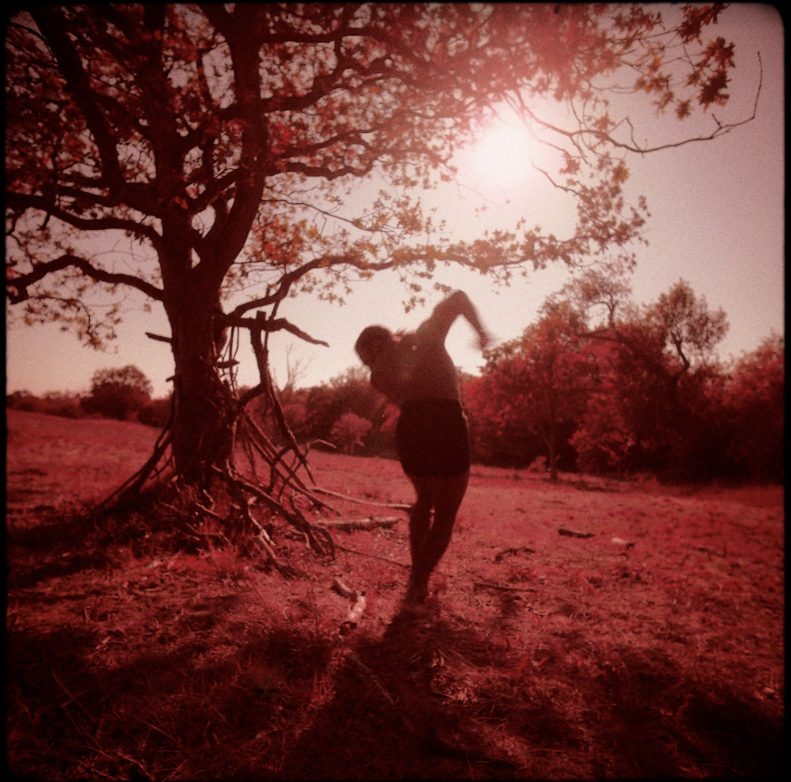
Memory
The judges said, “A sensitive and seamless interweaving of spoken commentary and body language – physical poetry – to create a beautifully coherent work. The film travels on a huge journey, from subjugation to freedom of expression, in just a few minutes, in a way that imprints itself on our memories, as viewers.”
The winning films, ‘Disquiet! Said Pessoa’ category
The second theme for entries was inspired by Pessoa’s master work, The Book of Disquiet. Writing in the introduction, Jeronimo Pizarro says, “The Book of Disquiet is one of the most astonishing portraits of the city of Lisbon, a successive accumulation of words and images that intertwine and complement each other in the reader’s visual representation.”
Having bought and randomly dipped into the book – this really is the best way to read it – I can see why it’s described as astonishing; some of the most luminous lyrical prose I’ve ever read, which reaches into your soul and makes you feel, and question, everything. Pessoa was an incredible poet, thinker and deeply fascinating human being.
First prize
Build me a Cottage – Pat van Boeckel, the Netherlands

This sublime work by Pat van Boeckel and Peter van der Pol is based on a poem of the same name by Fernando Pessoa, writing as his English heteronym Alexander Search. In his video art Pat examines the intertwined relation between humans and their environment, with the embodied experience of time and place being a central concern. This shines through in Build me a Cottage, which was filmed in an abandoned Portuguese wool factory. The film has the feeling of a dream, heightened by the presence of a stunning art installation in the abandoned factory, into which the protagonist descends to sleep, as if into a waiting, welcome grave.

Build me a Cottage
The judges said, “This is a film poem which begins and ends with startling images and creeps quietly into your heart during the walk between them. A beautifully felt rendering of Pessoa’s poem, which captures his words laterally rather than literally, and a stunning collaboration between filmmaker and installation artist.”
Watch Pat’s film, and hear him talking about it, in this video interview with the Já team https://www.youtube.com/watch?v=nOu0IvCTv44
Special Mention
Personafication – Quaresma Vieira, Portugal

This vivacious and engaging experimental film uses stop-motion, long exposures and light-graffiti to explore the possible paths Fernando Pessoa and his heteronyms would have walked around Lisbon, accompanied by a found poem using their words.
With photographers for parents, Ricardo started exhibiting at the age of 15 and was sponsored by the Portuguese National Film Institution to produce and direct his first film ‘Today was tomorrow’. His work in film and photography ranges from fashion to celebrity portraits, and he is determined to keep exploring creatively through visual, social and post-contemporary art.

Personafication
The judges said, “This film references and riffs with the words of Pessoa and his main heteronyms with great energy and wit. The crackling soundtrack, flickering visuals and graffiti-like text combine to embody a restless, insatiably curious mind – multiple souls within one person.”
The finalists
- One Step Away – Caroline Rumley, USA
- Llanto Congelado (Frozen Cry) – Charles Olsen, Spain
- Autonomy: The Journey of Becoming – Maryam Imogen Ghouth, United Arab Emirates
- Alcatraz – Micha Kunze, Germany
- Irgenwas Ist Immer – Micha Kunze, Germany
- Things you have forgotten to take with you – Elena Baucke, Italy
- Lost Upon Arrival – Ethan Mooney, New Zealand
- How to Outline Grief – Kym McDaniel, USA
- Changing Skin – Maxime Coton, Belgium
- Memory – Bauke Brower, The Netherlands
- Build Me a Cottage – Pat van Boeckel, The Netherlands
- Personafication – Quaresma Vieira, Portugal
The judging panel
The first round of selections, of the films to be screened at the festival, was undertaken by Já co-founder Tania Kumeda, with the support of fellow co-founders Dan Cotterall and Suresh Nampuri. Faced with the difficult task of choosing the winners and finalists was the three-strong judging panel:
Pedro Caldeira – a Portuguese filmmaker and co-founder of Tripé, which produces films, web series and video art. Tripé’s work has been selected for festivals such as the Napoli Film Festival, Filmapalloza Atlanta, Filmapalloza Paris, FIKE, Ymotion and Shortcutz, winning awards in competitions including the 48 Hour Film Project in Castelo Branco and Lisbon. Pedro is a jury member of PLANOS, Tomar’s International Short Film Festival.

Pedro Caldeira
Janet Lees – a poet and lens-based artist whose film works have been selected for many festivals and screenings, including the ZEBRA Poetry Film Festival, the Aesthetica Art Prize and Festival Fotogenia. In 2021 she won the Ó Bhéal Poetry-Film competition. Her poetry is widely published and anthologised, and her art photography has been exhibited around the world.

Janet Lees
Paulo Tavares – a Portuguese poet, editor, translator and co-founder of Artefacto Edições and Reverso – Encontro de Autores, Artistas e Editores Independentes. Currently completing a PhD in Literary Studies, Paolo has had several poetry books published and his latest, Órbitas, is due in 2023. His work as a literary translator runs from Daniel Defoe and Jonathan Swift to Ray Bradbury and Viet Thanh Nguyen.

Paulo Tavares
Interview with the JÁ International Theatre founders
I asked some questions of two of the four JÁ founders, Tania Kumeda and Dan Cotterall, to delve deeper into their motivation for making poetry film such a significant part of their theatre festival.
Tania Kumeda is an artist, stage director, event manager and avid movie-goer from Ukraine. Drawing her inspiration from words, images and memories, she completed a Master’s degree in Foreign Languages & Literature in her native city of Kyiv, where she has remained since February 24, 2022. For three years, Tania was a leading actress at the Kyiv Theatre of Comedy, and in 2017 she directed JÁ’s inaugural show RED in Lisbon. Tania was unable to be in Lisbon for the festival, but did an incredible job behind the scenes.

Tania Kumeda
Dan Cotterall studied literature in New Zealand and Oxford, gaining a First Class BA Hons and M.Phil, before spending two decades as a management consultant in the UK, Tunisia, France, China and Portugal. In JÁ’s inaugural production in Lisbon in 2017, he played the role of Smirnov in The Bear and Simone in Wilde’s A Florentine Tragedy, directed by Tania. As he is currently an associate professor at Shanghai International Studies University, he wasn’t able to be in Lisbon for the festival either, but like Tania he supported it to the hilt from afar.

Dan Cotterall
Dan, the vision for Já, as well as raising your profile in Europe as a theatrical entity, is to create the Já International Art Space. On your website you say, “As well as being a performance space, this venue will include audio & visual exhibits by up-and-coming as well as established artists, with the atmosphere generated by each activity feeding and elevating the experience of the others.” Could you tell us some more about this cross-fertilisation of different art forms, and how poetry film fits into your ethos?
Watch and listen to Dan’s answer
Tania, the themes for the festival’s poetry film competition were ‘Separation and Belonging’ and ‘Disquiet! Said Pessoa’. Could you tell us about how these came into being, and what they mean to Já – and to you personally?
The theme ‘Separation and Belonging’ was inspired by a thought that has lived with me for a very long time: until we parted we did not know we could feel so strongly, we did not know that our good memories could shrivel and vanish, that we may no longer find comfort in them. Through separation we learn a lot about ourselves and our world. And the distance only reinforces senses and memories…Distance from home, from loved one, from beliefs and from dreams.
This thought was born due to my experience of living in Lisbon as a foreigner, and now my reluctance to leave home that has only been reinforced during the war in my native Ukraine. I used to think that even in the worst times we could find comfort in memories and resurrect our shoe boxes with Polaroids or little memory compartments in our minds, as if nothing can take them away from us. But facing danger can make memories simply vanish, and shoe boxes can burn to ashes. So, it all started very personally for me. In the first weeks of the Russian invasion, for the first time in my life, I felt separated from memories. This coincided with the time we were working on the festival theme
There was also this intuitive feeling about people responding to the theme poetically with their own interpretations – and also about memories doing both good and bad by liberating and ensnaring people. When people move to other places, they take tactile memories with them; survival kits, a sense of home inside their bag packed with dear little things. So many of us can relate to this. A poetry film reminds me of this bag!
And yet, separation alone was not enough. One summer afternoon Dan and I were Zoom chatting about the theme being incomplete…”You separate only to be back to or discover where you want to be….” And Dan said at once: “That’s belonging”…And so it is!
The ‘Disquiet’ theme – ‘Desassossego’ in Portuguese – came from Suresh. It is a sacred word in Portugal and we wanted to encourage more artists to feel Fernando Pessoa and his extraordinary Book of Disquiet. We were so lucky to team up with an iconic venue, Casa Fernando Pessoa, to pay homage to Pessoa and infuse Lisbon with poetic voices from filmmakers so that Pessoa’s words could resonate in his birthplace.
In our turbulent world, themes can give a sense of home and safety. Poetry films are little houses filled with the most important things in the shape of words, images and sounds. Also, our themes gave a sense of home to the festival itself. So there was this strong inner call to contribute to stories and memories that will stay in our fragile world beyond us. The three of us brough three words – Separation, Belonging and Disquiet – as an invitation for artists to explore whole worlds behind them.
The footage for Kym McDaniel’s winning film, ‘How to outline grief’ rested on a shelf for six years until Kym was inspired to give it a new screen life after seeing the JÁ entry call. She told us, “As soon as I saw the topic, I knew I wanted to apply. It spoke to the film, but it really spoke to me – separated from dance but desperately wanting to belong.”
Bauke Brouwer, whose film ‘Memory’ won a Special Mention, said, “Most festivals are just ‘Submit your film’ and then you feel like you are submitting a thing which is very personal to a big machine. If it is a theme-based, it feels a bit more niche, a bit more personal, I think”
Ultimately, the official selection embraced love letters to homeland, romances, loss, unfulfilled love, balancing dreams and reality, searching for and keeping your identity in colonized states, nostalgia and longing for a new start, retreating to nature in the turbulent times and much more.
Tania, I know that a surprising ‘sub-theme’ also emerged, and it would be interesting to hear about that too.
It was a revelation that the sea was a leitmotif in so many of the films we received – even a protagonist! And this suits Lisbon so well, the city that lives by the sea. It is mesmerizing that artists found it healing to tell stories through water worlds, where the water was a narrative canvas between spaces, times, flashbacks and flashforwards. And the sea is both a separating and uniting element. It is truly special that all these themes shared the screen together in our family of films. But at the same time, of course, each film was absolutely individual.
I liked to imagine that people might come to the screenings from the seaside, with sand in their shoes or salty wind in their hair, and then watch a film they can connect with on a very tactile and emotional level.
Dan, what do you feel makes a great poetry film?
Watch and listen to Dan’s answer
Tania, as overseer of the poetry film segment of the festival, and a member of the selection panel, how did you approach the task of choosing the films that would screen in Lisbon? What were you looking for in particular?
As this project was brought to life and commissioned by the EU programme ‘Theatre in Palm’ for emerging artists, we wanted to support emerging poetry filmmakers, as specified in the submission call. But we also welcomed all!
We were working as a team, but I am very grateful to Dan and Suresh, who entrusted me with the final selection and sequencing. Personally, I was looking for a story and for feelings within a story. We feel it is very important not to lose the power of words, which is why we specified on-screen text – the films could be any language but had to be subtitled in English. But I soon realised that words can be silent and imagined, and with every new submission came a revelation!
We were looking for resonance with the theme, of course, as well as for original footage and original poems, or creative reimagining of footage from another source, and how it was entwined with the poetry; and the way it was entwined into poetry.
Also, film duration mattered, as we wanted to show as many stories as possible across the three screening days. Initially we talked of 5 minutes’ duration, and I am very happy we extended this to 7 minutes. Otherwise we would have missed several amazing films, including ‘The City in My Chest’, by Kazz Torabyeh and Hisham Bustani, a poetic nod to contemporary issues including individualism; ‘Someone Should Tell Them’, by Dorothée Karekezi, which explores vulnerability as a mixed race woman; and Kym McDaniel’s winning film ‘How to Outline Grief’.
We were also looking for a diverse range of films and contrasting stories, and were very happy to have a rich mix of black & white films, mood pieces, spoken word, experimental films, love letters on screen, animation, collage poetry and ekphrastic poetry.
Even more challenging than the initial selection was editing the films into a sequence without giving the impression that what the audience is watching is one long film, or that every story continues the one before. I didn’t want to influence the viewer’s perception, as every film has an individual voice. And it was crucial to make sure that the audience had time to breathe in between each film. I wanted to find the right rhythm for the sequences so that every film was a new heartbeat. Here I guess, the rhythm of the waves became a salvation and…very much I was thinking of the tides.
A final word from Tania Kumeda
I am overwhelmed with gratitude to the poets and filmmakers who responded to our themes in their unique and profound ways. We didn’t want to part company with artists too soon when the offline screenings were over, so with their permission, we are happy to welcome you to our online Poetry Film Gallery https://fest2023.jait.pt/poetry-film-gallery/. Here you can enjoy the entire in-competition programme in both categories, plus two out-of-competition films by Janet Lees, which we also screened at JÁ FEST.
JÁ–FEST – in-depth report by Janet Lees pdf
Please note that all the links in this pdf are accessible if you have Safari.
The Metaphysical World Where I Live – Lois P. Jones in-depth interview (winning film Frame to Frames I)
An important update to this year’s edition of Frame to Frames: Your Eyes Follow ekphrastic poetry film screening and competition has been the inclusion of a memorable poem on Ana Segovia’s festival painting by leading American poets Lois P. Jones and Elena K. Byrne (known for her extensive ekphrastic collection If This Makes You Nervous. To enter the competition please see previous post for entry details.
Since winning the first edition of Frame to Frames: Your Eyes Follow with Australian filmmaker Jutta Pryor (based on Leonardo da Vinci’s La Scapigliata) Lois has taken time to answer a series of interview questions, and the fascinating results are attached in part one of a two-part INTERVIEW.
As I work on my own poetry in relation to my family history project TREE, I find that there are certain voices who I admire and return to, and Lois is one of those. A truly outstanding poet who not only truly collapses place and time, but travels to visit historic locations to further her connection with the past.
Marc Zegans: Dada, Cage and Burroughs – a review of Borrowed Words – cut-up poetry by Peter Wortsman
About 15 years ago now I was deeply immersed in concrete and visual poetry, dipping in and out of the Futurists, Surrealists and Dadaists and the joy of cut-ups (découpé in French). Periodically this concept enters the poetry film world as in the now famous and leading work by American Dave Richardson – Love’s River of Errors.
I was recently reminded of this historic technique by the highly knowledgeable and widely read Marc Zegans (www.marczegans.com), in his extraordinarily in-depth review of Borrowed Words (Bamboo Dart Press), by multi genre, far-reaching wordsmith New York-based Peter Wortsman www.peterwortsman.com.

Peter Wortsman reading from the book
I am keen to feature reviews on publications that focus on both word and image, (for the Word and Image section of this website). So, it follows that with a deep respect for Marc’s turn of thought, I am delighted to share his recent contextual reading of this innovative chapbook, penned for the US-based Compulsive Reader (‘reviews of books by some of the hottest writers today’). Turning to the instinctive and tactile art of cut-ups also reminds me of how a simple process with text itself can prompt such a depth of discussion and thinking, and open up the author’s otherwise empty mind.
As Marc mentioned to me: ‘I place his fascinating small collection of poems in the context of several 20th-century art movements—Dada, Art Brut, and the chance operations of Cage and Burroughs. Peter’s book is a wonderful gathering of cut-up poems that he made during the pandemic and is well worth reading.’
Here’s the link for the review
See also:
Peter Wortsman reading from the book:
https://www.youtube.com/watch?v=iWUg51LoqMU
You can purchase the book here
And further information on the book from the publishers.
https://www.youtube.com/watch?v=ya-NL9EWick